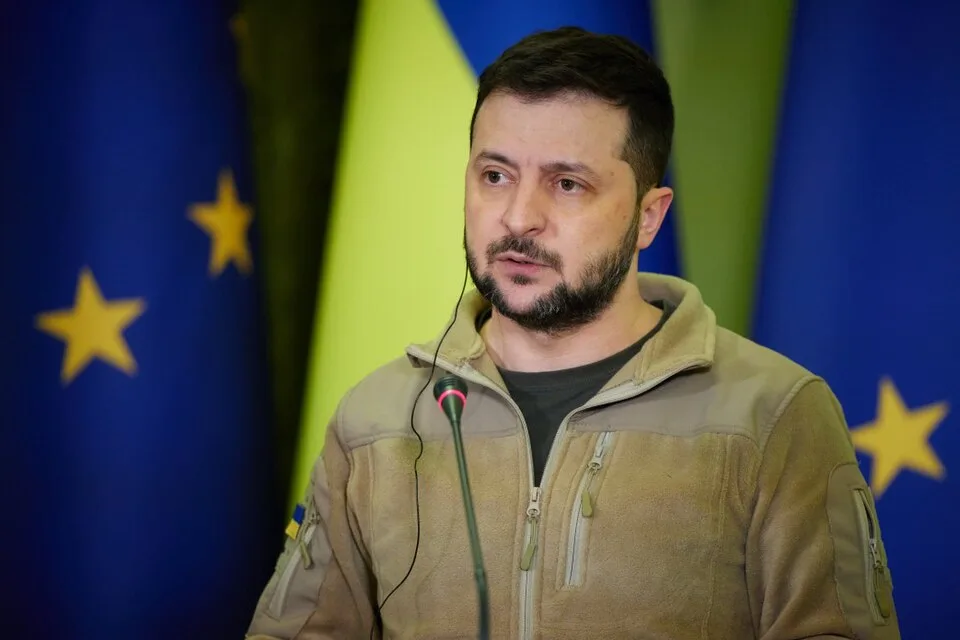
Volodymyr Zelenskyy showed up to NATO's Ankara summit Tuesday with a fairly extraordinary pitch: Ukraine has built the world's most advanced drone warfare machine, is killing tens of thousands of Russian troops every month, and can basically handle the rest of the war on its own. One problem. Russia keeps firing ballistic missiles, and Ukraine is running out of the interceptors to stop them.
The Ask Is Specific, and the Situation Is Serious
Zelenskyy addressed the NATO Defense Industry Forum with the kind of directness that tends to make Western defense ministers squirm in their expensive chairs. "Please help us get more air defense missiles. This is our top priority right now," he said, according to Politico. "We are capable of doing everything else ourselves. But when it comes to air defense, we need our partners' determination."
That word, determination, is doing a lot of heavy lifting. Ukraine is not asking NATO to fight the war for it. It is asking for the one specific capability it cannot manufacture fast enough on its own: Patriot interceptors, the U.S.-made missiles that are the only real answer to Russian ballistic missiles raining down on Ukrainian cities.
Politico reports Ukraine is facing a genuine shortage of these interceptors. And the shortage is not a logistics hiccup. It is structural. Patriot production worldwide is not keeping pace with the demand that a live shooting war generates. Zelenskyy knows this. He said current production is, bluntly, nowhere near enough.
What Ukraine Has Actually Built While We Were Debating
Here is the part of Zelenskyy's speech that deserves more attention than it will probably get. He told NATO leaders that Ukraine's forces now eliminate tens of thousands of Russian troops each month, and that the overwhelming majority of those kills come from drones. Ukraine's own drones. Built under wartime pressure by a country that did not have a serious domestic defense industry three years ago.
He pointed to Ukraine's naval drone campaign in the Black Sea, which has functionally denied Russia use of its own fleet in that theater, and to long-range drone strikes deep inside Russian territory. These are not small things. A country under full-scale invasion rebuilt its entire defense architecture on the fly and is now exporting lessons in asymmetric warfare to the rest of the world.
Zelenskyy called it plainly: Ukraine has the world's most advanced drone warfare capability. Given what Ukrainian forces have accomplished since 2022, that claim is not bragging. It is inventory.
The One Gap Russia Is Still Exploiting
Ukraine's drone and cruise missile interception rates are high. Against ballistic missiles, the picture is different. Ballistic missiles fly faster, higher, and on trajectories that are brutally difficult to intercept without the right equipment and enough of it. Politico's reporting makes clear that recent Russian barrages have exposed this vulnerability in ways that cannot be papered over.
"The one thing we still need to do here in Europe is build a strong defense against Russian ballistic missiles," Zelenskyy said at the forum. "This is Russia's last major advantage." That framing is pointed. He is not describing an insurmountable Russian war machine. He is describing a single remaining gap that Europe and its allies have the industrial capacity to close, if they choose to.
Zelenskyy said Ukraine had already discussed Patriot production licenses directly with Washington. He wants European governments and defense companies to get involved too, and he was explicit that waiting around for some theoretical solution in 2030 or 2035 is not a plan. "Europe needs affordable, mass-produced, anti-ballistic systems as soon as possible," he said. "In fact, today."
The Summit Is the Moment, If Anyone Uses It
NATO's Ankara summit is the immediate backdrop here. Zelenskyy's appearance at the Defense Industry Forum was a direct play to make air defense a headline deliverable when the summit wraps. These summits live and die by what commitments actually get made public, and Zelenskyy is clearly trying to ensure that Patriot interceptor supply is on that list rather than buried in footnotes.
Whether that works depends entirely on whether alliance members come to the table with actual numbers and production commitments, or whether they offer the usual warm language about standing with Ukraine followed by the usual slow walk on delivery timelines. History from this war suggests the latter is the default, and Zelenskyy has spent three years pushing against that default.
The Dingo Take
Let's be honest about what Zelenskyy's pitch at Ankara actually represents. A country fighting for its survival managed to out-innovate every major defense contractor on earth in drone warfare, turn a landlocked naval power into a Black Sea ghost story for the Russian fleet, and is now killing Russian forces at a scale that would have seemed impossible to war planners in 2021. And the thing standing between Ukrainian civilians and Russian ballistic missiles is whether NATO countries can be bothered to prioritize production of a missile system they already build.
The Patriot shortage is not a mystery or an act of God. It is a manufacturing and political priority problem. The U.S. and European governments decide how many Patriots get made. They decide how fast the lines run. Zelenskyy understands this, which is why he is talking about production licenses and European industrial capacity rather than just asking politely for whatever is in stock. He is trying to change the underlying math, not just beg for scraps from the existing pile.
If the Ankara summit produces real commitments on air defense production and delivery timelines, it will matter enormously. If it produces another round of communique language about unwavering support and shared values while Ukraine's Patriot stocks keep shrinking, then the summit will have done exactly what too many of these summits do: given leaders a photo opportunity while the people actually fighting the war pay the bill.



Comments