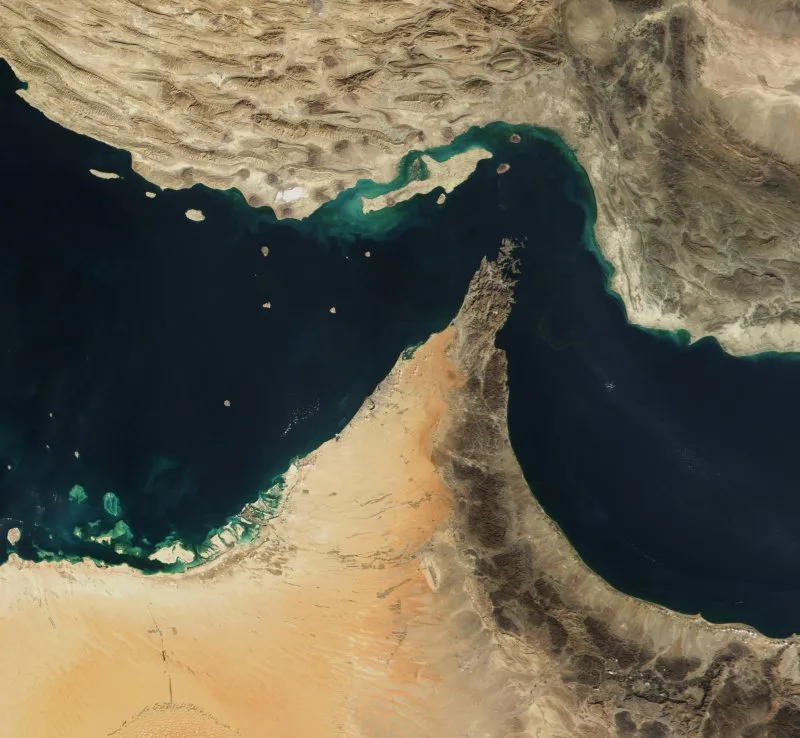
A Greek maritime CEO who monitors one of the world's most critical shipping chokepoints just said, flatly, "nobody is willing to move." Six consecutive nights of U.S. airstrikes on Iran. A collapsed ceasefire. A one-year-old in intensive care after losing a hand to shrapnel from a strike on a telecommunications tower. This is where we are.
Six Nights of Strikes and No End in Sight
The U.S. military confirmed early Friday that it had completed a sixth consecutive night of airstrikes on Iran, hitting what it described as "dozens of Iranian military targets" including coastal surveillance sites, air defense installations, and maritime infrastructure. That's six nights in a row. Not a surgical strike. Not a warning shot. A sustained military campaign against a sovereign nation, now entering its second week of continuous bombardment.
White House press secretary Karoline Leavitt made clear the administration has no intention of stopping, saying President Trump would not allow attacks on ships and Gulf states "without ensuring Iran pays consequences." Which sounds tough until you realize Iran is, in fact, still attacking things, and the Strait of Hormuz has effectively stopped functioning as a global shipping lane.
Iran's health ministry said Friday that U.S. strikes have killed at least 38 people and wounded 400 since June 22. Among the dead: three women and one child. Among the wounded: 22 women and nine minors under 18. Iran's official IRNA news agency said the most recent round of strikes alone killed eight people and wounded 20 more.
Iran's Counterpunches, Real and Alleged
Iran's Islamic Revolutionary Guard Corps came out Friday with a list of claimed counterstrike targets that reads like someone dared them to name every U.S. facility in the region. The IRGC claimed it hit a special forces base in al-Tanf, Syria, destroying helicopters and causing casualties. It claimed surface-to-surface missile strikes on a U.S. base in Kuwait that caused a "massive fire." It claimed it destroyed radar facilities in Oman, hit logistics centers with drones in Kuwait, targeted a base in Bahrain, and destroyed "refuelling aircraft and fighter jets" in Jordan.
CBS News is careful to note that U.S. officials offered no confirmation of any actual impacts, and that Iranian forces have a well-documented habit of exaggerating their claims. So take the IRGC's press release with whatever grain of salt you have left after three years of this. That said, Kuwait's Ministry of Electricity and Water did confirm on Friday that Iranian strikes hit power and water desalination stations, which is a real, verified problem for a country that is not, technically, a party to this conflict. A child in Qatar was also wounded by shrapnel after an Iranian weapon was intercepted, according to Qatar's interior ministry.
The Strait of Hormuz Is Functionally Closed
Here is the number that should make every economist on earth stop eating their lunch. Brent crude, the international oil benchmark, crossed $85 a barrel on Friday, up again after climbing Thursday. About 20 percent of the world's oil supply normally moves through the Strait of Hormuz. The word "normally" is doing a lot of heavy lifting right now.
Dimitris Maniatis, CEO of the Greek maritime risk management firm Marisks, told a Lloyd's List intelligence briefing Thursday that the situation has completely reversed from the brief optimism that came with the now-collapsed U.S.-Iran memorandum of understanding. "Vessels that were trapped inside the Persian Gulf for a very long time, belonging to owners that were extremely risk averse, managed to exit, and everybody was very joyful about that," he said. "With the recent events, everything has changed. We've gone back to the worst case scenario. Nobody is willing to move."
The man knows shipping risk for a living. And he's not describing a pricing problem or an insurance premium headache. He said crews are refusing to transit regardless of what they're offered. "It's not about money anymore, it's not about any other higher calling, it's purely about the fear that is governing the decision-making right now." That sentence should be projected on the wall of every energy ministry in the developed world.
Markets Are Starting to Feel It
Wall Street was already having a bad week before Friday's update. The Nasdaq dropped more than one percent Thursday, dragged down by sharp falls in Nvidia and Amazon. Asian and European markets followed the mood down, with steep losses in Hong Kong, Shanghai, Singapore, and Sydney. Europe's main markets opened in the red on Friday as well, though London held up slightly better, distracted by the incoming premiership of Andy Burnham.
The one winners in all this? Shell and BP, whose shares climbed as oil prices rose. There's a dark little joke in there somewhere about which industries profit from geopolitical catastrophe, and we're not going to be subtle about pointing at it.
Swissquote senior analyst Ipek Ozkardeskaya put it as plainly as anyone could: "Developments in the Middle East are getting worse by the hour." She said that Thursday. The hour has continued getting worse since.
A One-Year-Old Lost a Hand in Bandar Abbas
Let's not let the strategic overview bury the human reality here. Iran's semi-official Fars news agency reported Friday that shrapnel from a U.S. strike on a telecommunications tower in Bandar Abbas, a port city directly on the Strait of Hormuz, killed a woman and severely wounded her one-year-old child. The child lost a hand and sustained serious chest injuries. The child was in intensive care as of Friday's reporting.
The U.S. has repeatedly struck infrastructure in and around Bandar Abbas this week. Central Command describes these as strikes on military targets. A telecommunications tower. A woman who died in hospital. A one-year-old in the ICU. These are the coordinates where the language of "military targets" and lived reality stop matching up.
The Dingo Take
Let's be clear about what is happening here. The United States is six nights deep into continuous airstrikes on Iran. The ceasefire collapsed. The world's most important oil chokepoint is effectively shut down because professional mariners are too scared to sail through it. Oil is at $85 a barrel and climbing. Markets are rattled across three continents. And the White House's public posture is that Iran will "pay consequences" while Iran is, in the same 24-hour news cycle, claiming to have lit U.S. bases on fire from Syria to Bahrain.
This is not a controlled escalation. This is two countries punching each other in one of the most economically consequential pieces of ocean on the planet, with no visible offramp, no functional diplomatic channel, and a global shipping industry that has simply decided the math doesn't work anymore. When freight companies stop moving freight through a strait that carries a fifth of the world's oil, "the economy" is no longer an abstraction. That becomes your gas price, your heating bill, your everything that ships.
And somewhere in Bandar Abbas, a one-year-old child is missing a hand. That fact does not belong in paragraph nine of a shipping market update. It belongs at the front of every conversation about what this war is actually costing.



Comments