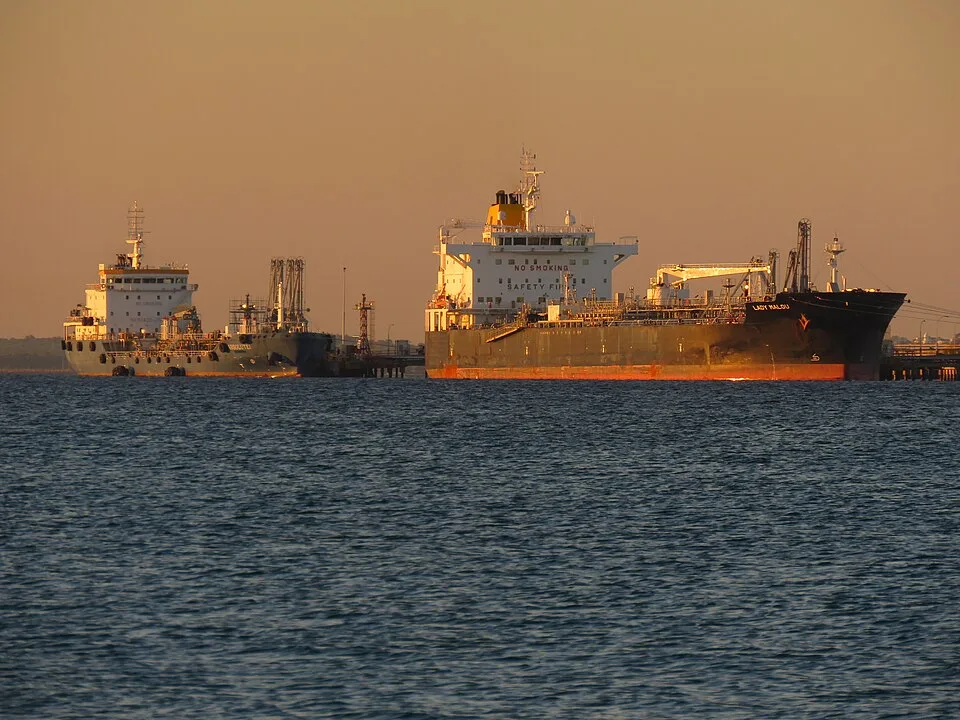
The United States bombed six bridges in Iran on Friday. Iran responded by launching missiles and drones at Kuwait, Bahrain, and Oman. Pete Hegseth posted a photo of a collapsing port tower to social media, apparently because this is just what we do now. Welcome to week one of whatever this becomes.
What Actually Happened Friday, As Best As Anyone Can Tell
According to NPR, the U.S. military struck Iranian air defense sites and military logistics infrastructure overnight, but Iran says those targets included six bridges in Hormozgan province and power infrastructure serving the region facing the Strait of Hormuz. The U.S. also appears to have destroyed a maritime control tower at the Iranian port of Chabahar, a major commercial gateway on the Gulf of Oman.
Iranian state media reported at least seven people killed and 20 wounded in the latest strikes. Iranian health officials say 38 people have been killed and more than 400 wounded over the past week total. These are human beings. Keep that number somewhere in your head while you read the rest of this.
Iran hit back hard. The Revolutionary Guard launched missiles and drones at Gulf states hosting U.S. military bases, including Kuwait, Bahrain, and Oman. Jordan intercepted Iranian missiles too, according to its state media. Iran also claimed it struck U.S. special forces at al-Tafn in Syria, a former U.S. military outpost that American troops vacated back in February. CENTCOM has not confirmed or denied the claim.
The Strait of Hormuz Is Still Closed, and That's the Whole Problem
This war, if you've lost the thread, started on February 28 when the U.S. and Israel launched strikes on Iran. Iran responded by shutting the Strait of Hormuz, one of the most critical shipping chokepoints on the planet. Roughly 20 percent of the world's oil supply moves through that strait. Iran then started demanding tolls from cargo and oil vessels trying to pass, attacking ships that didn't comply.
NPR reports that the U.S. reinstated a full military blockade on ships entering or leaving Iranian ports earlier this week. Since that blockade went back up, the U.S. military says it has redirected three vessels, struck and disabled an oil tanker that ignored orders, and boarded another ship to enforce compliance. Iran's position is that the U.S. directing ships along a southern coastal route through Omani waters violates a memorandum of understanding both countries signed just last month. That agreement is apparently already in tatters.
Oil prices jumped 10 percent this week. Just this week. If that number seems abstract, go check what you paid to fill your gas tank this morning.
Trump Threatened the Bridges Earlier This Week. Then We Bombed the Bridges.
This part deserves to sit alone for a second. NPR reports that President Trump threatened this week to strike Iranian bridges if Iran did not return to talks aimed at ending the war. Iran did not return to talks. The U.S. then struck the bridges. This is how foreign policy works now: public ultimatums, targeted infrastructure destruction, and a Defense Secretary sharing the wreckage on social media.
Pete Hegseth, who as recently as 2024 was a Fox News host with no military command experience, apparently posted a photo of the destroyed Chabahar port control tower collapsing as U.S. forces bombed it. No word on whether he used a filter. Legal scholars, NPR notes, have warned that attacks on infrastructure with wide civilian use can constitute a war crime under international law, depending on the circumstances. That warning is presumably somewhere in a report that nobody at the Pentagon is reading.
The Gulf Is Now an Active War Zone, Multiple Countries Deep
Kuwait, Bahrain, and Qatar all confirmed Friday that their air defense systems were actively intercepting hostile attacks. Qatar, which NPR identifies as a key mediator in U.S.-Iran talks, is now also defending its airspace from Iranian missiles. That is a profoundly bad sign for any near-term diplomatic off-ramp.
In Iraq's Kurdistan region, Iran's strikes killed at least eight opposition fighters, according to the Kurdish Iranian opposition group. Jordan is also now in the mix, having intercepted Iranian missiles crossing its airspace. The geography of this conflict keeps expanding, and each new country drawn in represents another potential flashpoint, another set of miscalculations, another moment where something goes wrong in a way nobody planned for.
U.S. Central Command has not publicly responded to Iran's claim of casualties from the Syria strike. That silence is doing a lot of work right now.
How We Got Here, Briefly
The immediate trigger for this latest escalation, per NPR, was an Iranian attack on a merchant vessel that was abandoned in flames by its crew. The U.S. launched new strikes in response. Iran then announced it was closing the Strait of Hormuz on July 12 and launched missiles and drones at Gulf neighbors. The U.S. blockade followed. Then the bridge strikes. Then Friday.
This is what escalation ladders look like when nobody gets off. Each move is presented as a response to the last move. Each side insists the other started it. The bridges get bombed, the oil prices go up, and the people dying in Hormozgan province are buried while analysts on cable news debate whether this meets the technical definition of war.
The Dingo Take
Here is the situation as of Friday morning: the United States is bombing bridges and maritime infrastructure in Iran, Iran is firing missiles at multiple Gulf countries simultaneously, oil is spiking, and the Defense Secretary is posting about it like it's a highlight reel. The war that started on February 28 is now five months old, involves active combat operations across Iran, Syria, Iraq, and the airspace of at least four Gulf states, and has killed hundreds of people. There is no obvious exit. The memo of understanding signed just last month is already being contested by both sides.
The bridge strikes deserve more attention than they're getting. Trump threatened them publicly, Iran didn't blink, and then we did it. That is not a negotiating strategy. That is a government painting itself into a corner in real time, destroying civilian infrastructure while legal scholars flag potential war crimes, because backing down would look weak and someone decided looking weak was worse than whatever comes next. Thirty-eight people are dead in the past week alone. The 10 percent oil spike will hurt actual Americans at actual gas stations. None of this is abstract.
What exactly is the endgame here? The Strait of Hormuz has been closed since February. The blockade is back. The talks that Qatar was supposedly mediating are ongoing while Qatar is intercepting Iranian missiles. At some point, someone has to ask the adults in the room what the plan is, and then figure out where the adults went.


Comments