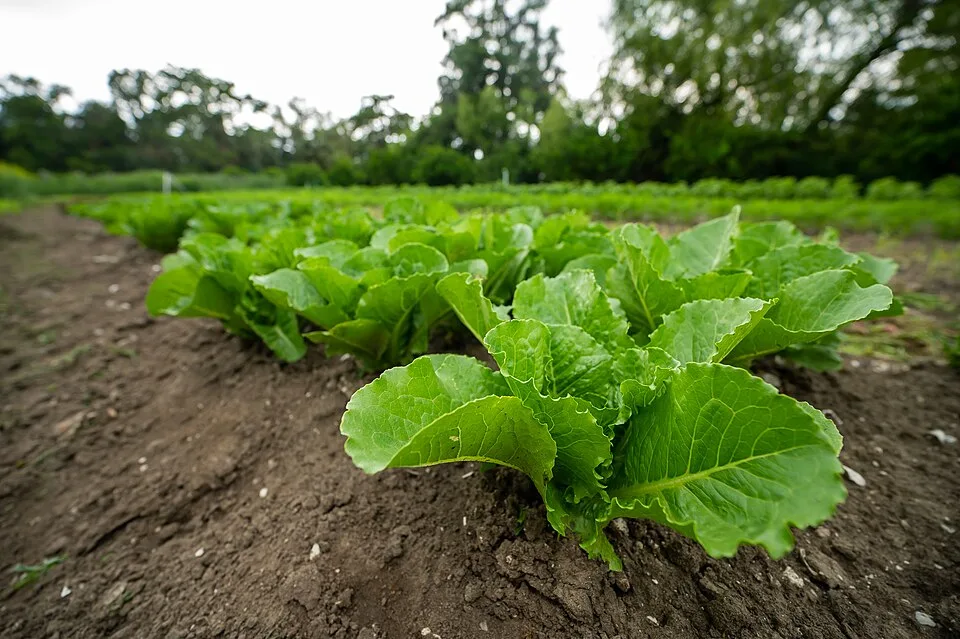
Over 1,600 people across five states are sick with a parasitic infection, Taco Bell yanked all Taylor Farms lettuce from every restaurant in America, and the FDA is still investigating the company for causing the whole mess. Taylor Farms tried to use a false positive test result as a get-out-of-jail-free card. The FDA had thoughts about that.
What the False Positive Actually Means (Not What Taylor Farms Says It Means)
Here's the thing about a false positive test result: it doesn't mean what the company currently under federal investigation very much wants you to think it means. Late Sunday, the FDA acknowledged that a lettuce sample collected from Taylor Farms had falsely tested positive for cyclospora, the parasite currently chewing its way through the digestive systems of over 1,600 Americans. Taylor Farms immediately issued a statement saying the FDA had "apologized." The FDA, on a call Monday, said that did not happen.
The FDA was pretty direct about the distinction in a post on X on Monday. "To clarify, this false-positive lab sample DOES NOT change the basis for FDA's ongoing outbreak investigation or the overwhelming epidemiological data supporting the current voluntary recall by Taylor Farms." They even capitalized DOES NOT, which is the federal agency equivalent of grabbing someone by the shoulders. The voluntary recall of shredded iceberg lettuce shipped to 27 states remains fully in effect.
Also worth understanding: the false positive didn't even come from the lettuce tied to the outbreak. According to NBC News, it came from a completely separate shipment the FDA collected during routine import inspections. This is a little like finding out the fingerprints at a crime scene don't match a suspect, except the fingerprints were taken from that suspect's other house, not the actual crime scene. The original evidence is untouched.
The Outbreak by the Numbers, and They Are Bad
As of Saturday, the Centers for Disease Control and Prevention had confirmed more than 1,600 cases of cyclosporiasis across Indiana, Kentucky, Michigan, Ohio, and West Virginia. That is not a small regional stomach bug situation. That is a multistate parasitic outbreak with a very specific source that investigators have been tracking with uncomfortable precision.
The trail leads directly to Taco Bell. Investigators found that a significant number of people who got sick had eaten at Taco Bell restaurants supplied with Taylor Farms shredded iceberg lettuce. On Saturday, Taco Bell responded by removing all Taylor Farms lettuce from every U.S. restaurant. When a fast food chain voluntarily strips its supply chain mid-operation across the entire country, that is the fast food equivalent of a five-alarm fire.
How Food Outbreak Investigations Actually Work
The false positive confusion gives us a useful opening to explain something the food industry would probably prefer you didn't understand: outbreak investigators don't actually rely on finding the parasite in a food sample to nail down a source. Donald Schaffner, a food microbiology professor and chair of the food science department at Rutgers University, told NBC News that investigators look at patient samples and interviews, food receipts, and supply chain data to trace contamination.
Schaffner was direct about the epidemiological picture. "Taylor Farms is still implicated because of the epidemiology," he wrote in an email to NBC News. "This means that people that ate at Taco Bell, and ate Taylor Farm lettuce, are sick with the parasite." He was careful to note that correlation is not causation, but called the statistical link strong enough that both the FDA and CDC consider it the probable cause.
Finding the actual parasite in food is, apparently, a long shot under the best circumstances. Schaffner told NBC News it's unusual for investigators to detect cyclospora in a food sample at all, because "almost always it's too late because the food has already spoiled or has been eaten." Don Stoeckel, an environmental microbiologist with the Produce Safety Alliance, told NBC News that while a positive test would have been powerful confirmatory data, the absence of one changes nothing about the public health recommendation: don't eat the product.
Taylor Farms' Very Bad, No Good Week
Taylor Farms is one of the largest fresh produce suppliers in the country, which means this is not a small operation quietly issuing a localized recall. This is a company with national reach, a voluntary recall covering 27 states, and a federal investigation that just publicly rejected the company's claim that the investigating agency apologized to them. That is a rough sequence of events.
The company did not respond to NBC News' requests for comment on Monday after the FDA disputed the apology claim. Staying quiet is probably the right legal instinct, but it does nothing to answer questions from the 1,600-plus people currently dealing with a parasitic intestinal infection they got from eating a salad.
The Dingo Take
Let's be clear about what Taylor Farms attempted here. A federal food safety agency found a false positive on a sample that wasn't even connected to the active outbreak, and the company's immediate public response was to announce that the FDA had apologized. The FDA then had to use capital letters on social media to explain that no, actually, the investigation is very much ongoing, the recall stands, and the epidemiological evidence tying Taylor Farms lettuce to 1,600 sick people has not evaporated because of a clerical anomaly in an unrelated shipment. This is not the behavior of a company that is confident in its innocence. This is the behavior of a company that saw a tiny opening and sprinted for it.
The broader story here is one the American food system keeps telling and nobody wants to hear. A massive produce supplier, operating at industrial scale across 27 states, gets linked to a multistate parasitic outbreak through the supply chain of one of the most recognizable fast food chains on earth. The parasite is nearly impossible to detect in food samples, the recall takes days to ripple out through distribution networks, and by the time investigators have their epidemiological picture assembled, over a thousand and a half people are already sick. This is the food safety infrastructure working as designed. That's the part that should bother you.
Meanwhile, the CDC's message is simple and has not changed: if the product is on their investigations page, do not eat it. Not because of a positive lab test. Because 1,600 people who ate it got sick, and that number is still climbing.



Comments