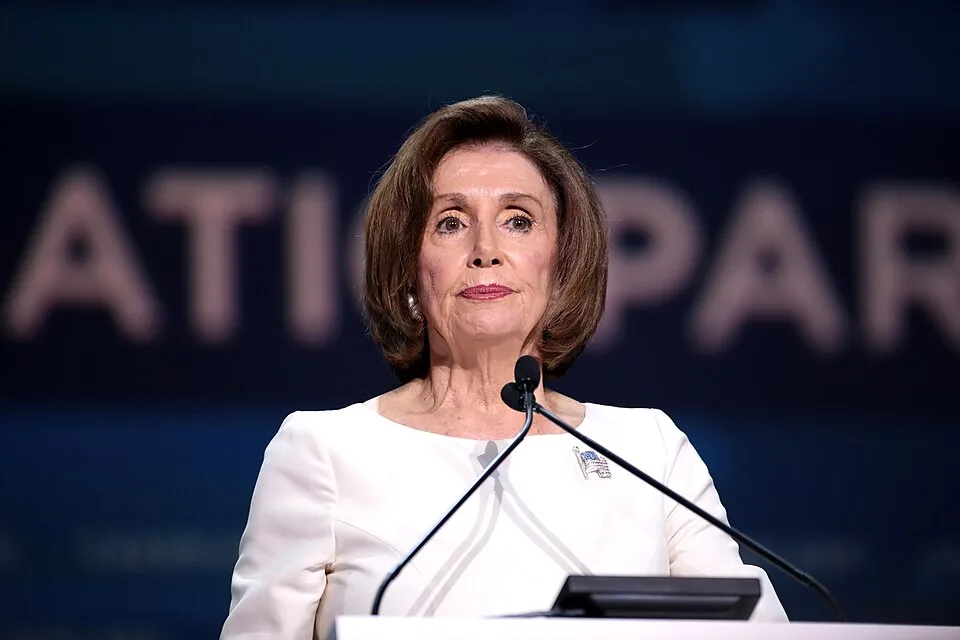
On Wednesday, the House of Representatives passed what it is calling a stock trading ban, which does not require anyone to sell a single share of stock they already own, does nothing about the president, and comes bundled with a voter ID requirement nobody asked for. Then the same body approved $70 billion more for a war that has killed 18 Americans and pushed gas back above four dollars a gallon. Then they left for a month.
The 'Ban' That Bans Almost Nothing
The Stop Insider Trading Act passed 232 to 198, with 13 Democrats crossing the aisle to join Republicans. Introduced by Rep. Bryan Steil of Wisconsin, the bill prohibits members of Congress, their spouses, and their dependent children from purchasing new individual stocks while in office. It also requires seven days advance notice before any stock sale, with penalties of $2,000 or 10% of the transaction's value, whichever is greater, plus forfeiture of gains.
Sounds pretty good on paper. Here is what the bill does not do. It does not require anyone to sell what they already own. It does not stop members from holding and benefiting from portfolios they have spent years building while making laws that affect every company in them. It does not touch the president, the vice president, or a single administration official. As CBS News reports, Rep. Joe Morelle of New York put it plainly on the floor: 'The bill would let members of Congress keep every single share of stock they currently own. The bill would allow members to liquidate their holdings at any time, profiting off years of ballooning investment portfolios.'
Rep. Pramila Jayapal of Washington called it 'a fake stock trading ban.' That is the nicest thing you can say about it. Non-partisan good government groups wrote a letter to Congress saying the bill does not ban ownership, does not prevent profit from trades, and does nothing about other asset classes. The letter did not mince words. Congress read it anyway and passed the bill.
Why They Jammed a Voter ID Bill Into a Stock Trading Bill
Because of course they did. Republicans attached an unrelated provision requiring photo identification for federal elections to the stock trading bill, as part of Trump's ongoing push for stricter voter eligibility rules. This is the kind of legislative move that would get a college student marked down in a basic civics class.
The voter ID attachment is why all but 13 Democrats voted against the bill despite broadly supporting the concept of restricting stock trading. Rep. Chip Roy of Texas, a Republican and co-sponsor of a much stronger bipartisan stock ban, asked his own party on the floor to just give the stock trading bill a clean vote. 'I think we should be having a straight up-or-down vote on the stock trading bill,' Roy said. 'I'm not done this year demanding that we have a straight up-or-down vote on stock trading.' He was ignored.
The STOCK Act, the 13-year-old law this is supposedly improving on, requires disclosure of trades over $1,000 within 45 days. According to CBS News, no member of Congress has ever been prosecuted under it despite documented violations. So the solution Congress landed on is to replace a toothless law with a slightly different toothless law, packaged with something designed to suppress Democratic votes. Governance.
Oh Right, They Also Funded a War
Before skipping town, the House passed the National Defense Authorization Act, the annual military policy bill, by a vote of 216 to 212. That is $1.1 trillion in Pentagon funding, approved on an almost purely party-line vote. Six Democrats joined Republicans. The NDAA typically passes with broad bipartisan support. This year it did not, because Republicans loaded it with $1.15 trillion in discretionary spending funded by cuts to domestic programs.
Rep. Adam Smith of Washington, the top Democrat on the House Armed Services Committee, said in a statement that he could not support 'meeting these needs by making massive cuts to critically important domestic programs and slashing taxes.' The bill now heads to the Senate, where Democrats blocked a previous version last week and are demanding concessions that limit Trump's war effort in Iran. Republicans will need Democratic votes to clear the 60-vote threshold. Good luck with that.
Separately, House Republicans advanced a $95 billion budget blueprint through the reconciliation process, which bypasses the Senate's 60-vote requirement and could theoretically pass on a party-line vote. NPR reports that more than $70 billion of that framework is earmarked for the Iran war. The rest goes to farm assistance and implementation of the SAVE America Act, Trump's election overhaul legislation.
The War Nobody Wants to Talk About Paying For
The Iran war has now cost $37.5 billion, according to Defense Secretary Pete Hegseth. Eighteen American service members are dead. Nearly 500 have been injured. Any progress toward a resolution, NPR reports, has crumbled as both sides continue trading attacks. The average price of gas in the United States is back above four dollars a gallon, according to AAA.
GOP fiscal hardliners pushed back on the $95 billion reconciliation framework because none of the new spending would be offset by cuts elsewhere. Other members raised concerns about pouring more money into a war that is escalating and that polling shows is unpopular with the American public. Speaker Mike Johnson convinced enough of them to swallow their concerns and vote yes anyway. That is the whole story of this Congress, really, in miniature.
Senate Majority Leader John Thune said Tuesday he wants to prioritize a deal to keep the government funded past September, when current funding lapses. If he cannot get Democratic support, Thune said he would consider using the reconciliation framework to extend government funding on a party-line basis. The House passed its own bill to fund the government through December on Tuesday, but Thune indicated it does not include several things the White House wants. So there is a lot still unresolved, and Congress is now gone for over a month.
What a Real Ban Would Look Like
For context: Rep. Anna Paulina Luna of Florida has been pushing a discharge petition on the Restore Trust in Congress Act, a bipartisan bill that would actually prohibit members of Congress, their spouses, and dependent children from owning or trading individual stocks outright. Her petition is still well short of the 218 signatures needed. A similar Democratic bill, the Restore Trust in Government Act, would extend the ban to the president and vice president. Also short.
Sen. Josh Hawley's version of a real ban cleared committee last year and has sat idle in the Senate ever since. The gap between what reformers on both sides want and what leadership actually passed Wednesday is not subtle. This is what happens when the people who would have to give up their stocks get to write the bill about giving up their stocks.
The Dingo Take
Let's be precise about what happened in the House of Representatives on Wednesday. Lawmakers passed a stock trading restriction that lets them keep all their stocks. They passed a trillion-dollar military bill that almost no Democrats could support. They added $70 billion more to a war that has killed 18 Americans and that their own members have doubts about funding. They attached a voter ID requirement to a stock trading bill to make sure Democrats couldn't vote for it cleanly. Then they left Washington for more than a month.
The Stop Insider Trading Act is a press release dressed up as a law. The good government groups who watched it get written and passed said so out loud. Republican members who wanted a real vote said so on the floor. The penalty for a violation is $2,000, which for a sitting member of Congress with a six-figure salary and a stock portfolio they are explicitly still allowed to hold is roughly the cost of a nice dinner. The whole thing is designed to look like reform while preserving every advantage that makes reform necessary.
And look, the Iran war is costing $37.5 billion and climbing, with 18 dead and no resolution in sight, and the House's response was to approve $70 billion more through a process specifically chosen because it does not require any buy-in from the opposition. Gas is back above four dollars. Members had concerns. Johnson talked them out of it. That is the job now. Not governing. Not legislating. Talking enough people into going along with it before the recess clock runs out. See you in September, assuming the government is still funded.




Comments