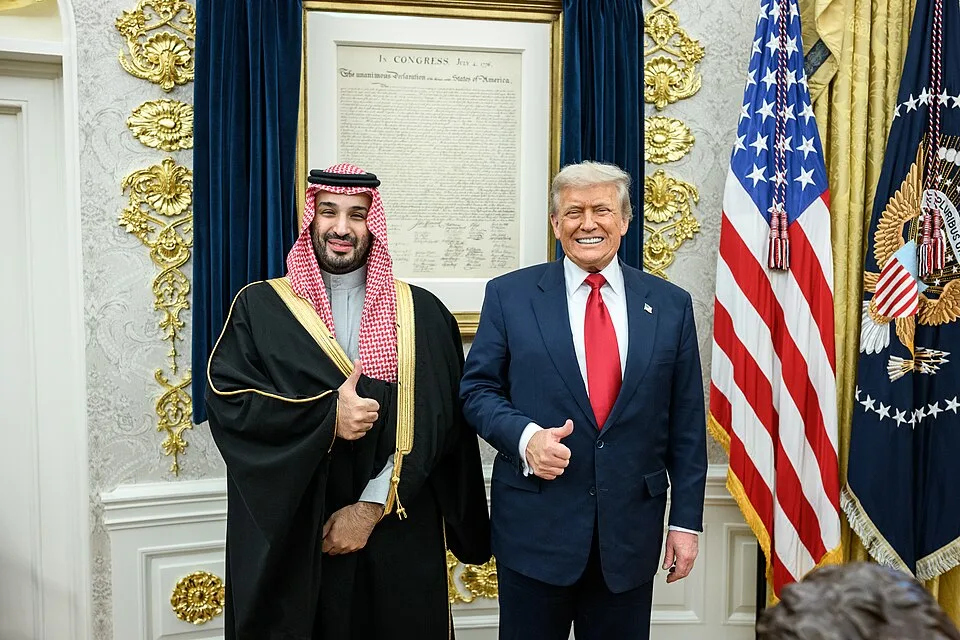
The United States is currently fighting a war with Iran, in part, to stop Iran from enriching uranium. This week, the Trump administration signed a deal that could let Saudi Arabia enrich uranium. No, there is no punchline. This is just the news.
What Actually Happened Here
According to The Guardian, US Energy Secretary Chris Wright and Saudi counterpart Prince Abdulaziz bin Salman signed a "peaceful nuclear cooperation agreement" along with a "bilateral safeguards agreement" on Wednesday. The full details have not been released yet, which is always a reassuring thing to hear about a nuclear deal.
The agreement is expected to expand American nuclear technology exports to the kingdom, create jobs, and, in the words of the Energy Department, "strengthen America's energy and national security posture." Westinghouse Electric Company, which stands to profit handsomely from Saudi Arabia's nuclear buildout, called it a "landmark step." Of course they did.
The deal now heads to Congress for review, where it will almost certainly face scrutiny from lawmakers worried about whether there are enough safeguards to actually prevent Saudi Arabia from one day building a bomb. Those concerns are not abstract. Saudi officials have explicitly said, on more than one occasion, that if Iran gets a nuclear weapon, Saudi Arabia will need one too.
The Part Where This Gets Completely Insane
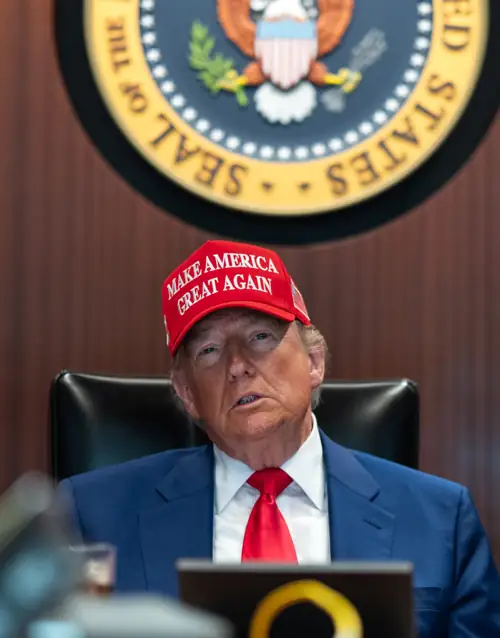
The day before this deal was announced, Defense Secretary Pete Hegseth was sitting in front of the Senate appropriations committee asking for more money to continue the US air campaign against Iran. The stated goal of that war, per the Trump administration itself, is to prevent Tehran from enriching uranium and making it impossible for Iran to build a nuclear weapon.
Let that sit for a second. One cabinet secretary is on Capitol Hill arguing that Iranian uranium enrichment is so dangerous it justifies an active war. The next day, another cabinet secretary is signing paperwork that could put uranium enrichment technology in the hands of Saudi Arabia, which shares a very long and complicated border with the same region.
Rosemary Kelanic, who runs the Middle East program at Defense Priorities, did not mince words. The Guardian quotes her social media post: "Giving Saudi Arabia uranium enrichment technology is a terrible idea on many counts. But it's especially idiotic to do it in the middle of a war over Iran's nuclear programme." She went further, asking directly whether Trump was "TRYING to provoke Iran into weaponising."
The Pakistan Wrinkle Nobody Is Talking About Enough
Here is a detail that deserves its own blaring siren. The Guardian reports that Saudi Arabia and nuclear-armed Pakistan recently signed a mutual defense pact, following Israel's attack on Qatar targeting Hamas officials. Pakistan's defense minister then stated publicly that his nation's nuclear program "will be made available" to Saudi Arabia if needed.
So Saudi Arabia already has a nuclear-armed friend willing to share the goods, and now it's getting American uranium enrichment cooperation on top of that. The Middle East's nuclear situation, which was already a white-knuckle mess, just got several layers more complicated.
Israel, long considered the region's only nuclear-armed state, is watching all of this unfold in real time. The implications of that are left as an exercise for the reader.
The Official Justification Is At Least Honest About the Real Motive
To be fair to the Trump administration, the logic they're using here is not entirely made up out of thin air. A US report to Congress earlier this year, cited by The Guardian, argued the deal was necessary to prevent China or Russia from filling the void. Saudi Arabia has been explicit for years: partner with us on nuclear technology, or we'll partner with Beijing or Moscow, who ask far fewer questions about nonproliferation.
The report also pitched the deal as a way for the US to "re-establish our leadership in the global civilian nuclear energy market." In other words, this is partly a trade and geopolitical competition play dressed up in national security language, which at least has the virtue of being a coherent argument, even if the timing is absolutely deranged.
Wright said in his statement that the agreements "uphold the highest standards of nuclear safety and nonproliferation." The Guardian notes, however, that the deal will likely not include the enhanced IAEA monitoring found in the additional protocol that Iran was subjected to under the 2015 nuclear agreement. You know, the deal Trump blew up in his first term because it wasn't strict enough.
Congress Gets to Weigh In, For Whatever That's Worth
The agreement goes to Congress for review, and there are already warnings that it could face real opposition. Nonproliferation groups have spent years raising alarms about exactly this scenario, arguing that giving Saudi Arabia a path to domestic enrichment creates a potential route to weaponization that cannot be easily walked back.
A civil nuclear deal with Saudi Arabia has been in the works since Trump's first term and continued under Biden, The Guardian reports, and it never crossed the finish line until now. The fact that it finally got done during an active US military conflict with Iran over the exact same issue suggests that either the geopolitical calculus genuinely shifted, or nobody in the room had the nerve to say the obvious thing out loud.
The Dingo Take
There is a version of this story where the US-Saudi nuclear deal makes cold, cynical sense. You want American companies selling reactors instead of Russian or Chinese ones. You want Saudi Arabia inside your tent rather than outside it. You want leverage over Riyadh as the region reshapes itself around oil decline. Fine. Those are real arguments made by serious people.
But you cannot make those arguments in the same week your defense secretary is telling Congress the Iran war is justified because Iranian uranium enrichment is an existential threat. You do not get to hold both of those positions simultaneously without the entire premise of the war collapsing into self-parody. Either enrichment by adversarial-ish Middle Eastern states is a red line worth fighting over, or it isn't. Pick one. You don't get to bomb one country for it and hand the technology to another.
What we are watching is American foreign policy operating on pure vibes, where the actual principle at stake matters far less than who is asking and how much money is involved. Saudi Arabia is a customer and a partner, so enrichment is fine. Iran is an enemy, so enrichment is a casus belli. The logic isn't strategic. It's transactional all the way down, and somewhere in Tehran right now, someone is filing that fact away for later.



Comments