The Trump administration has spent months loudly promoting its Make America Healthy Again agenda, urging Americans to eat more fruits and vegetables and fewer ultraprocessed foods. It also just killed the single largest federally-funded nutrition education program in the country. Both of those things are true at the same time, and no one in the White House seems particularly interested in explaining how.
What Got Axed and How Big It Was
The program in question is the Supplemental Nutrition Assistance Program Nutrition Education and Obesity Prevention Grant Program, which everyone with functioning lungs calls SNAP-Ed. As NPR reports, it funded cooking classes, farmers markets in low-income neighborhoods, school nutrition lessons, and community health initiatives across every single U.S. state for decades. The Journal of Nutrition Education and Behavior described it as a "pillar of the public health infrastructure in the US." That pillar is now rubble.
Trump eliminated it last summer when he signed the Republicans' massive spending and tax bill. Federal funding stopped at the end of September 2025. States that had leftover money have until the end of this September to spend it, and then it's gone. Programs that have operated for years, in some cases decades, are winding down right now, in real time, as MAHA influencers post Instagram reels about seed oils.
The Part Where This Makes Absolutely No Sense
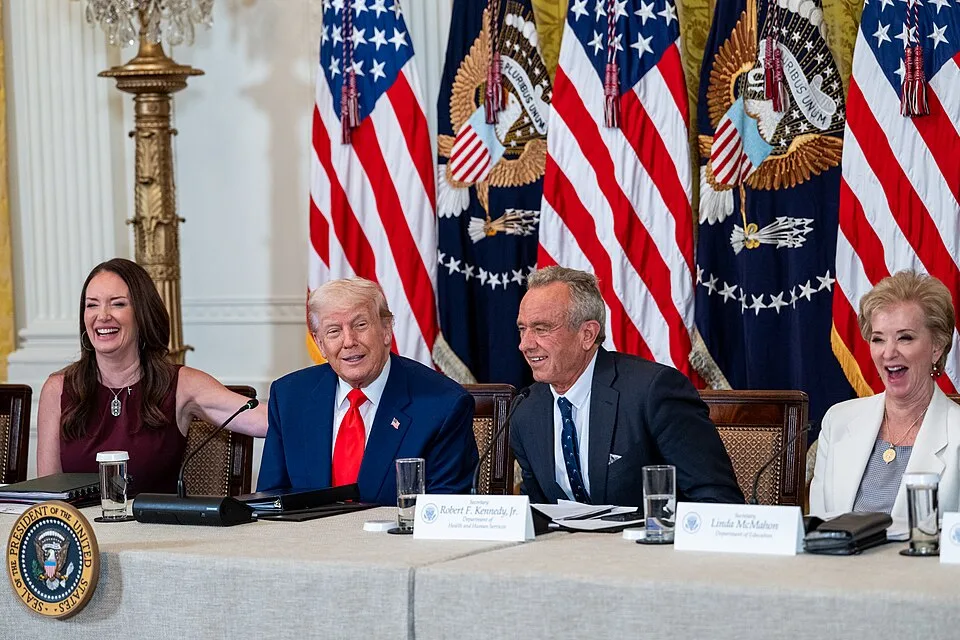
Look, political hypocrisy is not exactly a rare commodity in Washington. But this one is a special kind of stupid. The MAHA agenda, championed by Health Secretary Robert F. Kennedy Jr. and enthusiastically adopted by the Trump administration as a brand, is explicitly about getting Americans to eat better. Less processed food. More real vegetables. Healthier kids. The whole thing.
SNAP-Ed was literally designed to accomplish that. In low-income communities. For SNAP recipients and other qualifying low-income people. Where diet-related disease rates are highest and access to nutrition information is lowest. "It doesn't make sense," Cornell University nutritional sciences professor Tashara Leak told NPR, "when we have an administration [promoting] the Make America Healthy Again efforts that are focused on decreasing consumption of ultraprocessed foods and wanting to encourage people to eat more fruits and vegetables, to then get rid of the largest federally-funded nutrition education program that helps to achieve those goals." She is being polite. The word she is looking for is "incoherent."
When NPR asked the White House how eliminating SNAP-Ed aligned with MAHA goals, they did not actually answer the question. Instead, they said the law Trump signed had "strengthened SNAP for future generations" and that the tax cuts improved all Americans' financial situations. The tax cuts. For a nutrition education program. That's the answer they gave.
What SNAP-Ed Actually Looked Like on the Ground
This wasn't a bureaucratic abstraction. NPR's Joe Hernandez visited West Philadelphia in July and found Elines Olivares, a nutrition educator with The Food Trust, set up inside Ray Food Market, a corner store, offering shoppers small cups of oatmeal and explaining fiber. The Food Trust's Healthy Corner Store Initiative, funded largely by SNAP-Ed, trains store owners and helps stock corner stores in low-income neighborhoods with healthier options, including providing refrigerators, shelving, and signage.
A woman named Sherron Dudley stopped in that morning and learned that her honey wheat bread was, in fact, flavored white bread. "I gotta change my bread," she said. That is the program. That is the thing that got cut. Someone learned something real and useful about what they eat, in a neighborhood without a full-service grocery store, from a program the federal government funded for that exact purpose.
The recent SNAP-Ed project list reads like a public health greatest hits: cooking workshops led by indigenous chefs in Southwest Colorado, meal planning and budgeting classes in Kansas, a social marketing campaign in Michigan teaching parents to model healthy eating for their kids, a free fitness center built inside a North Carolina church. All of it, gone.
The Program's History Makes the Cut Even More Damning
SNAP-Ed traces its roots to the Food Stamp Act of 1977, which called for a national nutrition education program to help low-income families make better food purchasing and preparation decisions. Funding began in seven states in 1992. The Healthy, Hunger-Free Kids Act of 2010 expanded the program's reach and added a formal obesity prevention component. By 2013 it operated in every state in the country. By 2018, the USDA itself called it the "most robust federal nutrition education program" in existence.
Almost fifty years of bipartisan investment in this infrastructure. Republican and Democratic administrations alike kept it running, expanded it, pointed to it as evidence that the federal government could do something useful for poor people's health. The Trump administration looked at that track record and decided the tax cut bill needed something to offset its costs.
The Timing Could Not Be Worse
All of this is happening, as NPR points out, against a backdrop of rising food prices. Groceries cost more. Budgets are tighter. The communities SNAP-Ed served, already operating with less margin for error, are now losing the educators and programs that helped them stretch those budgets toward healthier outcomes.
The administration's MAHA push, meanwhile, targets things like food dyes and seed oils and ultraprocessed snacks in school cafeterias. That's the public-facing health agenda: go after the additives, reform school lunch, make noise about what kids are eating. Just don't fund the programs that teach low-income adults how to cook, read a nutrition label, or find affordable produce in a neighborhood where the closest thing to a grocery store is a gas station mini-mart. That part, apparently, is on them.
The Dingo Take
Here's the thing about MAHA as a political project: it has always been more about aesthetics than about policy. It looks great on a podcast. RFK Jr. talking about raw milk and chemical additives plays well to a specific and very online audience. But the actual work of improving nutrition outcomes for poor Americans, the unglamorous, expensive, long-term work of building infrastructure in underserved communities, that's never been the point. That's grunt work. That's SNAP-Ed. And grunt work does not survive a tax cut bill when nobody powerful enough is in the room to fight for it.
What makes this particularly maddening is that the administration isn't even pretending the two positions are compatible. When NPR pressed the White House for an explanation, they pivoted to talking points about tax cuts and stronger SNAP. They didn't try to reconcile eliminating nutrition education with promoting nutrition. They just changed the subject. That's not hypocrisy born from complexity or competing priorities. That's not giving a damn.
Sherron Dudley learned she'd been eating flavored white bread and decided to switch to whole wheat. That moment, that tiny, real, useful thing that happened in a corner store in West Philadelphia, is the actual MAHA agenda in action. The federal government spent decades building the infrastructure to make more moments like that possible, in every state, for millions of people. The Trump administration signed it out of existence and told us the tax cuts made up for it. They did not.



Comments