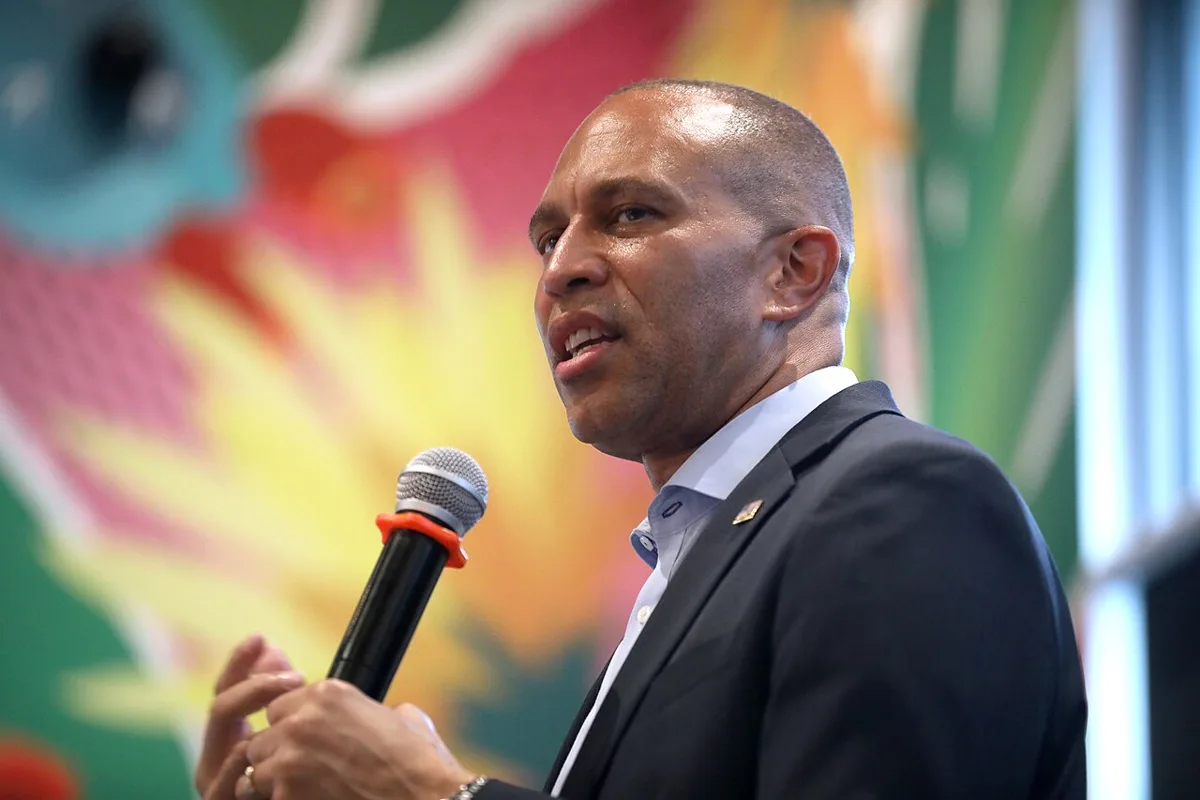
One hundred days out from the midterms, House Minority Leader Hakeem Jeffries went on CNN and said the quiet part loud: Republicans have nothing to run on because they broke every promise that got them elected. Eighteen American troops dead in a war Trump swore he'd never start, grocery bills still climbing, and a $1 trillion Medicaid cut sitting on their record like a stain that won't wash out. So what's the GOP's strategy? Voter fraud panic. Of course it is.
The Promises Were Real. The Delivery Wasn't.
Trump ran in 2024 on two things above almost everything else: he would lower costs, and he would not drag America into another Middle Eastern war. Those were not vague, wiggle-room pledges. He said he'd lower costs on day one. He said he was elected to stop endless wars, not start them.
According to The Guardian, 18 American service members are now dead in a war with Iran that began in February, after the US and Israeli militaries launched military operations against the country. Gas prices have surged. Grocery prices have surged. And exclusive polling conducted for The Guardian found that 95% of Americans believe the country is suffering an affordability crisis right now. Ninety-five percent. That is not a partisan number. That is basically everyone.
Jeffries, speaking to CNN's Dana Bash on State of the Union, was blunt about what that means politically. 'It was Donald Trump who promised to lower costs on day one,' he said. 'But we know that costs haven't gone down in this country. Costs have gone up.' He didn't need to say much else. The record speaks at full volume.
The War Nobody Voted For
Here's the thing about running on stopping wars and then starting one: people remember. Trump told voters he was 'elected not to start wars, endless wars in the Middle East, but to stop them.' Jeffries quoted that back at Republicans on Sunday like a prosecutor reading a confession into evidence.
The Iran conflict, which The Guardian reports began in February 2026, has now cost 18 American lives and left hundreds more wounded. That is not a skirmish. That is a war. The kind Trump specifically promised would not happen under his watch. Instead it is happening, it is escalating costs for ordinary Americans at the pump and in the grocery aisle, and Republicans are now expected to answer for it at the ballot box in November.
Decision Desk HQ analysis, cited by The Guardian, currently forecasts Democrats are likely to win a House majority. Republicans are narrowly favored to hold the Senate, but narrowly is doing a lot of work in that sentence.
Voter Fraud Panic: The Classic Distraction Play
So what are Republicans actually talking about when they're not defending the war or the costs? Voter fraud. Specifically, a software error in New Jersey that caused 6,600 noncitizens to be registered to vote. The Guardian reports that fewer than 400 of them actually voted before the error was caught and corrected.
Trump and his allies took that disclosure and sprinted with it, using it to amplify claims that noncitizen voters could compromise the integrity of the midterms. Jeffries on Sunday called this out as exactly what it is: a topic-change. When you cannot defend your record, you attack the election itself. It is a play Republicans have run before, and they are running it again because the alternative is explaining why the war happened and why milk costs this much.
Jeffries was direct about the dynamic. Republicans, he argued, find noncitizen voter panic a far more comfortable conversation than the one where they explain what happened to the Middle East promise or the cost-of-living promise or the more than $1 trillion they cut from Medicaid last year.
The Medicaid Cut Is Still Sitting There
It would be easy to let the war and the prices dominate this story and forget about the Medicaid cuts, which is probably what Republicans are hoping for. Jeffries did not let that happen.
According to The Guardian, Republicans cut more than $1 trillion from Medicaid, the public health insurance program for low-income and disabled Americans, roughly a year ago. Jeffries brought it up Sunday as the capstone to his argument: you raised costs, you started a war, and you took health insurance from the poorest people in the country. 'They have nothing to run on,' he said. 'We're going to run on fighting for an affordable America.'
That is a clean contrast, and Democrats know it. The question is whether the party can translate a strong argument and a favorable forecast into actual seats. Forecasts are not votes.
What the Next 100 Days Look Like
The midterms are November 3rd. Democrats need to hold together a message about affordability, the war, and health care while Republicans try to make the entire election about noncitizen voters and whatever cultural panic is trending that week. It is not a new playbook, but it has worked before.
Jeffries on Sunday spoke in language designed to land with the people the data says are already feeling it. 'Too many people are working hard, they're playing by the rules, but they can't thrive,' he told Dana Bash. 'They can barely survive. Not enough food on the table, not enough gas in the tank.' That is not spin. That is what 95% of Americans are apparently telling pollsters when they pick up the phone.
The Decision Desk HQ forecast gives Democrats the House. But forecasts shift, money moves, and October surprises exist. Jeffries knows the argument. The hard part is the execution.
The Dingo Take
Let's be honest about what the Republican position heading into November actually is. They are being asked to defend a war that their president promised would never happen, prices he promised he would lower, and a Medicaid cut that stripped health coverage from over a million low-income and disabled Americans. Their answer to all of that is: have you heard about this software glitch in New Jersey? Fewer than 400 people. That is the counter-argument. That is the whole thing.
Jeffries is right that Republicans have nothing to run on. But Democrats have a documented history of being handed a winning argument and finding inventive ways to fumble it. The polling looks good. The forecast looks good. Eighteen dead Americans in a war the president swore he'd prevent is a damning fact. A trillion dollars cut from Medicaid is a damning fact. Costs up across the board is a damning fact. At some point, a political party has to actually win with the facts they've been handed.
One hundred days. The war is ongoing. The prices are not coming down. And Republicans are going to spend every one of those days talking about voter rolls in New Jersey because the alternative is too ugly to look at directly. Whether Democrats can make voters stare at it anyway is the whole ballgame.


Comments