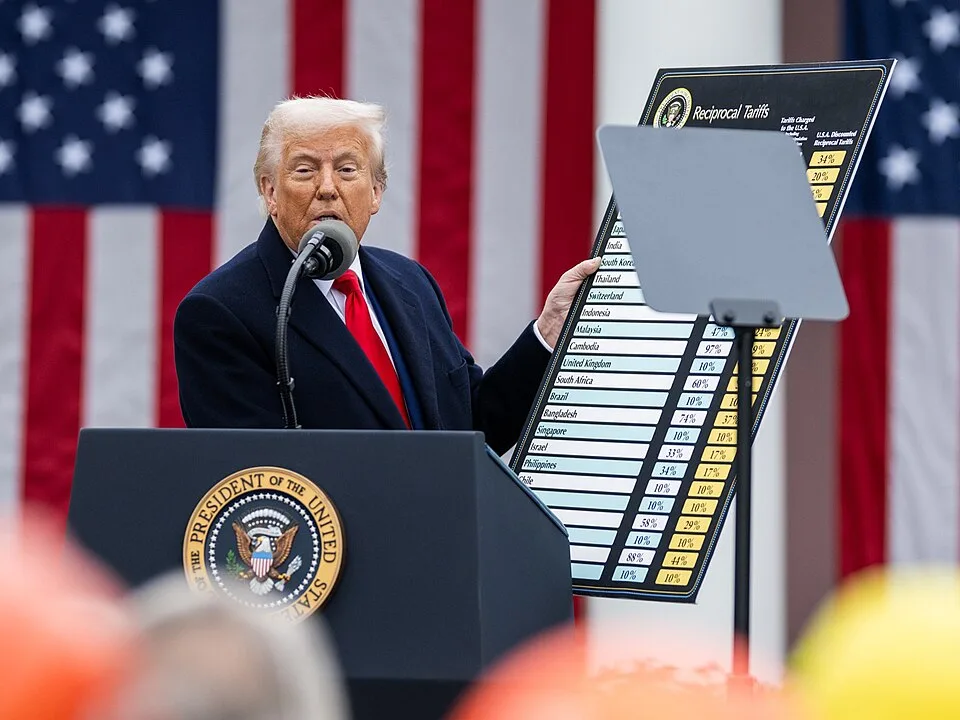
You would think that losing a tariff case at the Supreme Court might give a president pause. You would be wrong. The same small businesses that already dragged Trump's trade agenda through the courts — and won — are back with fresh lawsuits targeting his latest round of tariffs, according to Axios.
Who's Suing and Why It Matters
Two separate lawsuits were filed against the new tariff regime, and the plaintiffs are not random complainers. Axios reports that one suit was brought on behalf of Burlap & Barrel, a spice company that previously challenged Trump's Section 122 tariffs, alongside watch retailer Collective Horology. The other was filed by Learning Resources, a toymaker that already took Trump to the Supreme Court over his tariffs and came out the other side with a win.
Think about that for a second. These are not corporate lobbyists in expensive suits. These are small businesses that have already burned significant money and time fighting this administration in court, won, and are now forced to do it all over again because the tariffs just keep coming in new flavors. At some point it stops being policy and starts looking like punishment.
A Pattern the Courts Are Starting to Notice
This is not happening in a vacuum. Axios notes that these lawsuits arrive after courts already rejected one of Trump's tariff regimes this year and cast serious doubt on another. The judiciary has been doing real work here, and the administration keeps responding by finding new legal hooks to hang new tariffs on, apparently hoping something sticks before anyone can get an injunction.
The broader legal strategy from the White House seems to be: lose, regroup, repackage, repeat. It's the tariff equivalent of a guy who keeps submitting the same rejected manuscript to the same publisher with a slightly different title. At some point the courts may stop being polite about it.
Small Businesses Are the Canary Here
Here is what makes this story matter beyond the legal sparring. Large corporations have entire teams of trade lawyers and the profit margins to absorb tariff costs, or at least to pass them quietly down the supply chain until they hit a consumer who has no idea what happened. Small businesses do not have that cushion.
Burlap & Barrel sells spices. Learning Resources makes educational toys. These are not entities with offshore tax strategies and global supply chain flexibility. When tariffs hit their import costs, it hits hard and fast, and it shows up immediately in either prices or closures. The fact that they keep coming back to court, at their own expense, tells you something about how unsustainable the current situation is for businesses operating at that scale.
What Comes Next
The cases will now work their way through the federal court system, joining a growing pile of tariff litigation that has been stacking up since 2025. Given that Learning Resources already has a Supreme Court win on its resume, it arrives at this new fight with more credibility than most plaintiffs. That is not nothing.
Axios is continuing to track the legal details as they emerge, and given how quickly tariff cases have been moving through the courts this year, it probably will not be long before there are significant developments. The administration will respond. Lawyers will brief. And somewhere a small business owner will refresh a court docket while trying to figure out whether to place their next import order.
The Dingo Take
Let's be direct about what this is. The Trump administration has lost in court on tariffs, had other tariff schemes placed under serious legal doubt, and its response has been to keep generating new tariff actions and let the litigation sort itself out later. That is not a trade policy. That is a strategy of exhaustion, betting that businesses will give up before the government does.
The problem with that bet, at least right now, is that some of these businesses are not giving up. Learning Resources went all the way to the Supreme Court once already. Burlap & Barrel has been in this fight for a while. These are people who are genuinely angry enough, and damaged enough financially, to keep going back. That matters. The courts cannot fix trade policy by themselves, but they can keep making the administration pay a legal and reputational price every time it tries to run the same play.
Congress could, of course, step in and reassert its constitutional authority over trade at any point. It has not. It will probably continue to not do so. So we are left watching small business owners do the legislative branch's job for them, one lawsuit at a time, with their own money and their own futures on the line. Inspiring, in the most exhausting possible way.





Comments