Two Baltimore men have been charged with 23 counts each after allegedly hauling a lemur, a spider monkey, and several snakes into a luxury mall's parking garage, setting the floor on fire, and photographing semi-clothed models posing with the animals. Vernon Crowfey III, 32, and Jayden Evans, 25, were arrested in a sting operation after a Baltimore police detective confirmed neither man had so much as a basic federal exhibitor license. The animals were living in neglect. The parking garage was briefly on fire. And somehow this was a business.
The Setup: Ring of Fire, Spider Monkey, Luxury Mall
According to The Guardian, Crowfey is the owner of a photography company called Photogeniks. Evans runs something called Tarzan Exoticz, which sells personalized photoshoots with exotic animals. Together, they allegedly sourced animals from North Carolina without a permit and transported them to Maryland for what charging documents describe as shoots featuring three semi-clothed women, the animals, and a garage floor that was literally set on fire.
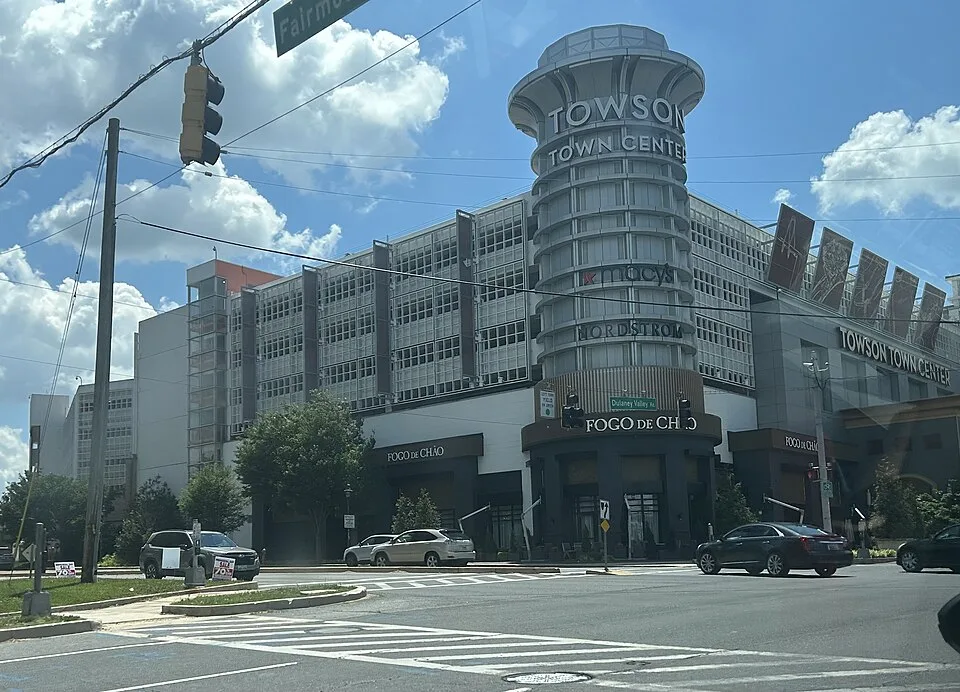
The location was a parking garage beneath Towson Town Center, a shopping mall in suburban Baltimore. Video and photos circulating online show flames across the concrete floor. Crowfey told CBS News Baltimore that mall security gave him a verbal okay for the shoot, explaining that he'd informed them it would involve a "fire flame photoshoot" and they told him to be out before closing time. This is not, legally speaking, a permit. This is a guy telling another guy something through a window booth.
Crowfey also defended setting fire to a parking structure with the following ironclad logic: "We talkin' about an empty parking lot, with no civilians, full of concrete and I don't think I've ever seen a parking lot be set on fire with lighter fluid." That's correct, Vernon. Most people have not done that. That is the point.
The Sting: USDA, Undercover Cops, and a Very Bad Day
This didn't unravel because someone tripped over a lemur. Baltimore police ran an actual sting operation. A detective first checked with the USDA's Animal and Plant Health Inspection Service and confirmed that neither Crowfey nor Evans held a valid Class C exhibitor or dealer license, which is required under the Animal Welfare Act if you're going to be professionally exhibiting animals. They did not have one.
An undercover officer then arranged a photoshoot with Evans involving the lemur and spider monkey. When police executed a search warrant at Evans's home, The Guardian reports they found snakes, lizards, rabbits, a tarantula, and several other animals on the premises. Both men were arrested there.
Charging documents noted that neither the lemur nor the spider monkey were being kept in proper living conditions, which investigators described as "overall neglect." The two primates were transported to the Maryland Zoo. The animals are, presumably, doing better now than they were in the parking garage.
23 Charges Each, Including Arson
Crowfey and Evans are each facing 23 misdemeanor and felony charges. That list includes animal cruelty and arson-related offenses, the latter stemming from setting fire to the parking garage. Which, again, is a thing they did.
The charges are a reminder that the exotic animal business operates inside a specific legal framework that exists precisely because people with cameras and Instagram accounts have repeatedly demonstrated they cannot be trusted to make good decisions around wild animals. A Class C exhibitor license under the Animal Welfare Act isn't a bureaucratic hoop. It exists because a lemur is not a golden retriever, and a parking garage is not a zoo.
Jacob Thompson, owner of a company called Global Pets, told Baltimore's WBAL-TV what anyone who has thought about this for five seconds already understands: "Primates are not domesticated. They are wild animals. They have not been in captivity and bred long enough to get that wildlife feature out of them. All it takes is for these animals to hit a maturity point or something triggers them to react in a way that's wild-like." In other words, the spider monkey could have had a very different reaction to the ring of fire.
Tiger King's Cousin Has a New Documentary
The Guardian points out that the arrests landed the same week HBO released a new documentary called Monsters of God, from filmmaker Eric Goode, who previously made Tiger King. The timing is either a coincidence or proof that the universe has a sense of irony.
Goode told Vanity Fair that pop culture directly drives demand for exotic and endangered animals. "Jurassic Park had this crazy paradoxical effect on pet sales in the US. Finding Nemo made everyone want to buy a clown fish," he said. "When I used to travel in Asia 10 to 15 years ago, I would see owls in the marketplaces, and people would say: 'Oh, those are Harry Potter birds.'" So if you want to understand how a spider monkey ends up posing with a semi-clothed model in a burning parking garage in Towson, Maryland, the throughline runs straight through the content we consume and the animals we decide we need to own or photograph as a result.
Instagram and TikTok have not made this better. Evans's social media accounts, still up at the time of arrest according to charging documents, showed photos of him and others with various animals, including "nonhuman primates." It was a business. People were paying for it.
The Dingo Take
You are supposed to look at this story and see two reckless idiots who got caught. And sure, fine, that's part of it. But what this case actually represents is the extremely predictable output of an influencer economy that has made exotic animals into props, where likes and follower counts are sufficient justification for dragging a lemur into a parking structure at night and lighting the floor on fire for content.
The USDA licensing requirement isn't red tape. The Animal Welfare Act isn't bureaucratic overreach. These rules exist because the alternative is exactly what you see in this charging document: animals living in neglect, transported across state lines without permits, posed for photographs in conditions that a federal inspector deemed unacceptable. The men running this operation were not outliers who stumbled into something illegal. They were running active social media businesses, advertising their services publicly, and counting on the fact that nobody would look too closely.
Somebody looked. Twenty-three charges apiece. The lemur is at the zoo. And a parking garage in Towson, Maryland will carry the faint ghost of lighter fluid and bad decisions for years to come. That's the whole story. The system worked, barely, and only because a detective happened to check. How many shoots happened before this one?




Comments