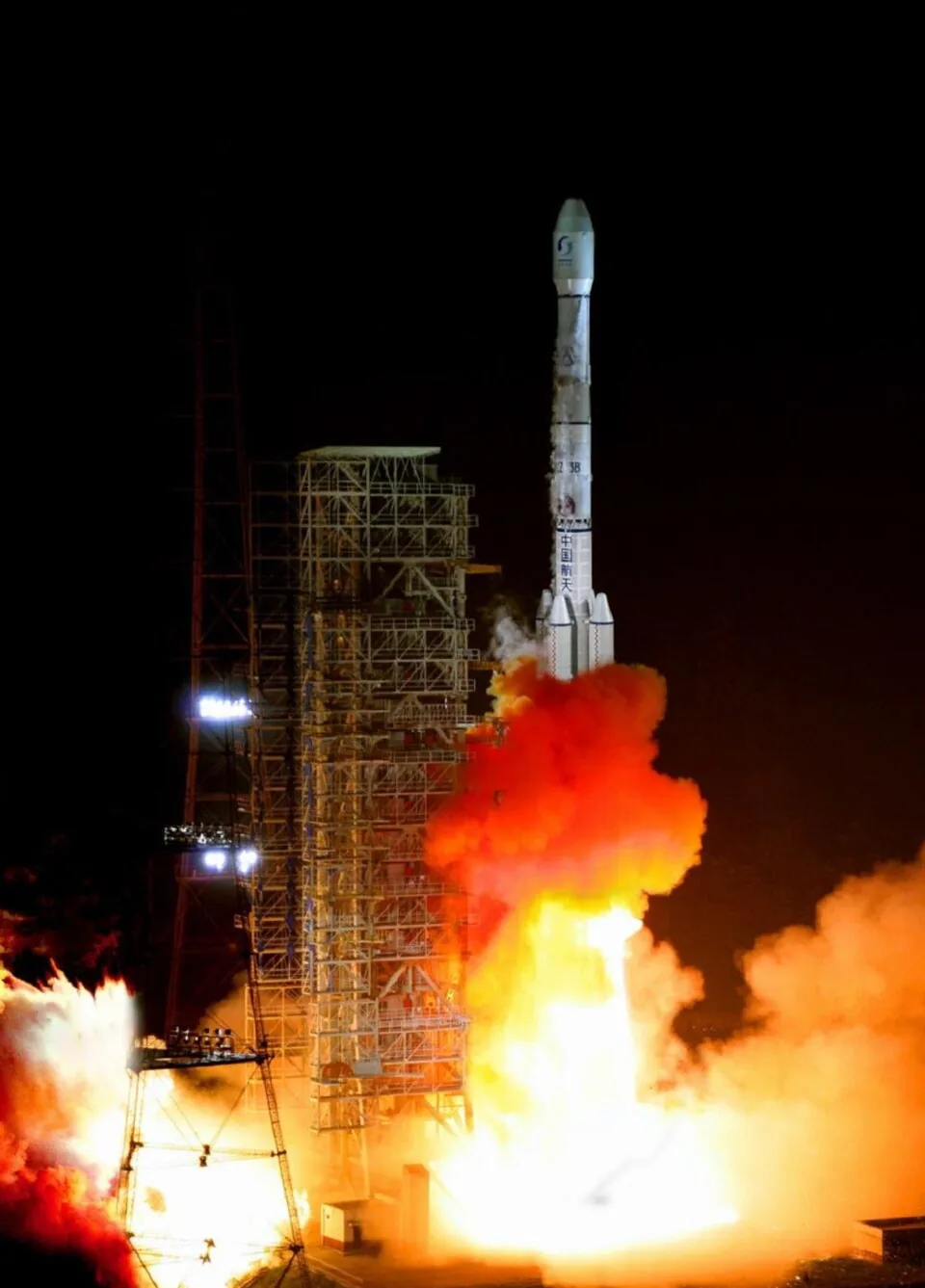
China had a rocket pointed at the moon, weeks of launch preparations underway, and an ambitious mission to hunt for water ice at the lunar south pole. Then, days before liftoff, they called the whole thing off — and offered roughly one sentence of explanation for why.
The Statement That Explained Nothing
The China Manned Space Agency released a brief statement on Sunday saying the Chang'e-7 mission "does not meet the launch conditions" and "cannot take place during the planned window this year." That's it. That's the whole thing. A mission years in the making, scrubbed with the kind of transparency you'd expect from a note left on a refrigerator.
According to CBS News, the agency added that the decision followed a "comprehensive assessment" guided by the principles of "prudence, reliability and absolute mission success." Which sounds impressive until you realize it tells you absolutely nothing about what actually went wrong. No technical failure named. No system identified. No timeline for a rescheduled launch. Just vibes and bureaucratic reassurance from one of the most secretive space programs on the planet.
What Chang'e-7 Was Actually Supposed to Do
This was not a minor mission. Chang'e-7 was set to explore permanently shadowed craters near the lunar south pole, conduct environmental and resource surveys of the region, and search for water ice — the kind of resource that, if confirmed in usable quantities, could fundamentally change what a long-term human presence on the moon looks like. CBS News reports it was aimed at making "breakthroughs in key technologies," per the official Xinhua news agency.
The Chang'e program has a genuinely impressive track record backing this up. Chang'e-6 returned to Earth in 2024 with rock and soil samples from the far side of the moon, a world first that no other space agency has managed. China has been building toward something serious here, mission by mission. Which makes the abrupt, unexplained halt all the more striking.
Preparations had been underway at the Wenchang Space Launch Site on Hainan Island for weeks. You don't quietly roll a rocket to the pad and run weeks of pre-launch checks for a mission you're planning to quietly call off. Something changed. We just don't get to know what.
The Race Nobody Admits Is a Race (Except When They Do)
The timing matters because the context is brutal. In June, NASA Administrator Jared Isaacman told the world that the United States was "very much in a space race" against China, with both countries working toward crewed lunar landings within the next few years. That's a sitting NASA chief using the words "space race" without a hint of diplomatic hedging. The gloves are off.
NASA's Artemis II crew made history in April, becoming the first humans to travel around the moon in more than half a century, per CBS News. They are set to receive the Congressional Space Medal of Honor for the 10-day mission. The U.S. has momentum. China just blinked, at least for now.
That doesn't mean China is losing. One postponed mission is not a collapse. But in a competition where perception matters almost as much as actual capability, pulling your flagship lunar mission weeks before launch without a clear explanation is not a great look. Every other space agency on Earth is watching. So is every aerospace engineer trying to assess where the real technological gaps are.
Opacity as Policy
China's space program operates under a fundamentally different information model than NASA. American failures are litigated in public, often painfully so — congressional hearings, inspector general reports, journalists with FOIA requests. When something goes wrong at NASA, you hear about it in granular, sometimes excruciating detail.
When something goes wrong in China's space program, you get a statement about prudence and comprehensive assessments. The country that achieved a world-first sample return from the far side of the moon in 2024 doesn't owe anyone a press conference. But the opacity makes it genuinely difficult to assess whether this is a minor technical delay, a significant engineering setback, or something more structurally concerning. We're left reading the tea leaves of a one-paragraph government statement.
The Dingo Take
You are supposed to read "prudence, reliability and absolute mission success" as reassurance. It is not reassurance. It is the verbal equivalent of a government official straightening their tie and walking away from the microphone. When a space agency scrubs a major mission days before launch after weeks of on-site preparations and refuses to name a single specific reason, the phrase "comprehensive assessment" does not fill the gap — it just marks where the explanation was supposed to be.
None of this means China's lunar program is in serious trouble. The Chang'e program's track record is real and it is impressive, and one postponed launch window does not erase the fact that China returned samples from the far side of the moon before anyone else even tried. The program will regroup, reschedule, and almost certainly launch. But the space race framing that NASA itself is now using openly means every delay gets read as a data point, fair or not.
What's actually unsettling here is how little either side's rhetoric matches the messy reality of trying to do extraordinarily hard things in space on political timelines. The U.S. is celebrating Artemis II while Artemis III's crewed landing keeps sliding. China just pulled a high-profile mission with no explanation. Both programs are operating under pressure that has nothing to do with engineering and everything to do with national prestige. That pressure doesn't make rockets safer. It makes the silence around failures louder.





Comments