
Florida had its worst dengue year on record in 2024, logging over a thousand cases and 85 locally acquired infections across ten counties. Now, barely into September 2026, the state already has 41 locally acquired cases and officials are openly saying they expect that number to climb. Great time to live somewhere that never gets cold enough to kill the mosquitoes.
Where It's Hitting and How Fast
As of September 1st, the Florida Mosquito Control Association reported 30 confirmed locally acquired dengue cases in Hillsborough County alone, with seven more in Miami-Dade, three in Pinellas County and one in Palm Beach County. That's 41 statewide, and the operative word from health officials right now is "rising."
The New York Post reports that Hillsborough and Pinellas counties are already under mosquito-borne illness alerts issued by the Florida Department of Health. Mosquito-control crews have ramped up aerial and ground spraying in areas showing dengue activity, and they're inspecting private properties for breeding sites. This is not a drill.
Locally acquired cases are the ones that matter most here. When someone picks up dengue while traveling to Southeast Asia or Latin America, that's a personal health problem. When they come home to Tampa, get bitten by a local mosquito, and that mosquito then bites their neighbor, that's a transmission chain. That's how an imported virus becomes a neighborhood problem.
What Dengue Actually Does to You
According to the CDC, dengue is a viral illness spread by mosquitoes that causes fever, severe body aches, nausea, and rash. Most people recover within a week or two. A meaningful portion of people who contract it show no symptoms at all, which sounds reassuring until you realize that asymptomatic carriers are still walking around getting bitten by mosquitoes that then spread the virus to the next person.
The part that should get your attention is severe dengue. In some cases, Mayo Clinic notes, the illness can progress rapidly to a life-threatening condition, often within a day or two of the fever breaking. Warning signs include severe stomach pain, repeated vomiting, unusual bleeding or bruising, and difficulty breathing. If you're in an affected area and you spike a fever, and then you start feeling better, and then you suddenly feel much worse, go to an emergency room.
The virus is most common in tropical and subtropical regions, including Southeast Asia, the Western Pacific islands, Latin America, and Africa. Florida is not supposed to be on that list. Florida is increasingly on that list.
2024 Was Already a Five-Alarm Warning
Here's the context that makes the 2026 numbers more alarming. The CDC reported back in May that 2024 was a record year for dengue in the United States, with 3,798 total cases across US states and Washington DC. That was a 359% increase over the annual average for 2010 through 2023. Three hundred fifty-nine percent.
Florida led the country with 1,044 cases, accounting for more than a quarter of the national total. Of those, 85 were locally acquired, spread across ten counties. For comparison, California had 18 locally acquired cases and Texas had two. Florida wasn't just ahead of the curve. Florida was lapping everyone else.
About 97% of 2024 cases nationwide were travel-associated, meaning people brought the virus back from abroad. The remaining 3% were locally acquired. That's the percentage everyone is watching, because that's the one that tells you whether dengue is setting up shop in American mosquito populations or just passing through.
The Mosquito That Loves Your Backyard
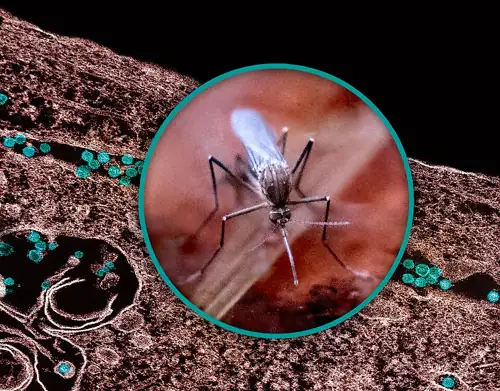
The mosquito responsible for dengue transmission is what experts call a container breeder. It doesn't need a swamp or a pond. It lays eggs in buckets, planters, plant saucers, old tires, discarded toys, and anything else that holds even a small amount of water. Florida has a lot of those things in a lot of backyards.
Pinellas County Mosquito Control Director Alissa Berro put it plainly to Fox 13: "Dengue does not stop at county lines." The mosquitoes themselves tend to stay in a small area, she explained, but infected people travel constantly throughout the Tampa Bay region. One infected person crossing a county line for work, a doctor's appointment, or a grocery run creates a new transmission opportunity wherever they go.
The Florida Mosquito Control Association is urging residents to follow what it's calling the "three Ds": Dress in long sleeves and light colors, Defend with repellent containing DEET or similar compounds, and Dump standing water from any containers around the house. Simple, unglamorous, and actually effective. The mosquito that spreads dengue does not care that you have a nice patio.
The Dingo Take
You are supposed to believe that dengue fever is a tropical disease, something you get in other countries and then bring home as a cautionary tale for future travelers. That framing is now significantly out of date. Florida recorded 85 locally acquired cases in 2024 across ten counties, logged 41 more by September 1st of this year, and officials are forecasting more to come. At some point the word "rare" stops doing the work we're asking it to do.
This is what happens when a warming climate slowly expands the viable habitat for disease-carrying mosquitoes, and when a state's identity is so tied to its weather and its tourism economy that no one wants to say the quiet part loud. Florida has been flirting with endemic dengue transmission for years. The trend lines are not going in a reassuring direction. The CDC already called 2024 a record year before the summer was even done. That record will eventually be broken.
Empty your planters. Use the DEET. If you live in Hillsborough or Pinellas County and you get a fever this month, mention that to your doctor rather than waiting it out with ibuprofen and denial. And maybe, as a society, we could have a conversation about why a disease historically confined to the tropics is increasingly becoming a Florida summer staple. That conversation will require acknowledging some things a lot of powerful people in Florida have spent considerable energy not acknowledging. Good luck with all of that.



Comments