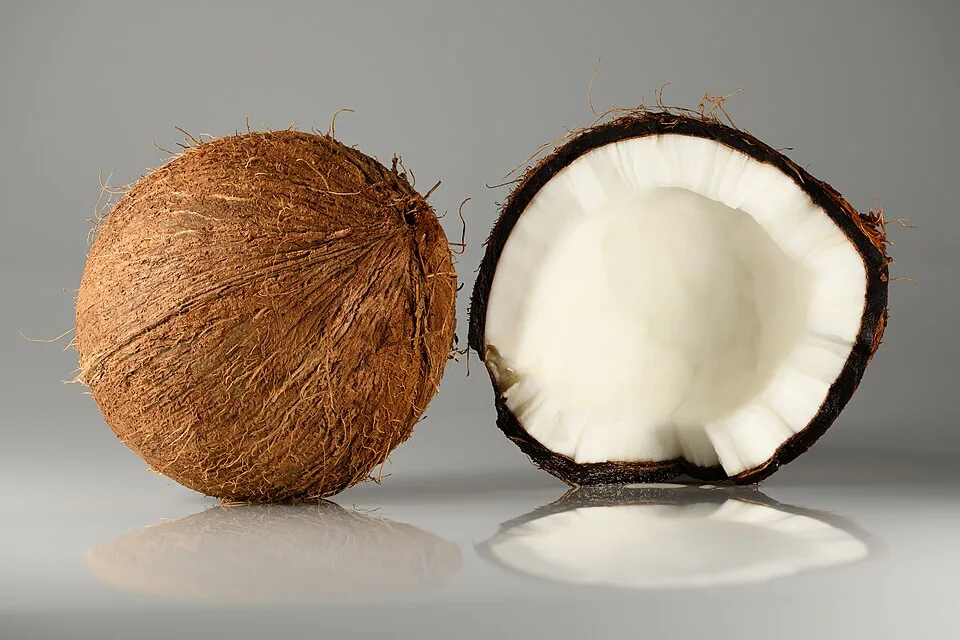
A high school senior from East Honolulu built an ocean filter out of coconut garbage, discovered it harbored fungi that eat sunscreen and microplastics, and then found out some of those fungi might not exist anywhere in the scientific record. Vera Wang, a senior at Kaiser High School, did all of this while also, presumably, attending class. The rest of us have been watching reality television.
The Filter That Started Everything
Wang's project began during her sophomore year, which means she was about fifteen when she started outpacing most of the oceanographic research community. According to Good News Network, she designed and built an ocean filter capable of removing sunscreen chemicals and microplastics from surface water, drawing inspiration from traditional Polynesian weaving techniques and constructing the whole thing from coconut byproduct waste.
Let that sink in. The filter is made from stuff that would otherwise get thrown away, modeled on centuries-old Indigenous craft traditions, and it actually works. That's not a feel-good science fair poster. That's a functioning prototype for a real environmental intervention.
The thing about microplastics and chemical sunscreen runoff is that they are genuinely catastrophic for coral reef ecosystems and marine life at almost every level of the food chain. Hawaii's reefs in particular have been hammered. Oxybenzone, one of the most common sunscreen chemicals, is so damaging to coral that Hawaii banned it in 2018. So the problem Wang decided to take on as a teenager is one that states and federal agencies have been slowly failing to solve for years.
Then It Got Weirder and Better
Pulling the pollutants out of the water is only half the battle. You've captured the microplastics and sunscreen chemicals. Now what? You can't just throw them in a bin and call it done. Wang apparently thought about this for approximately five seconds before going to work on part two.
As Good News Network reports, she began researching the fungal communities living inside coconut husks, specifically studying whether they could biodegrade the very pollutants her filter was capturing. Working in Anthony Amend's lab at the University of Hawaii at Manoa alongside graduate student Kaylee Christensen, Wang found that naturally occurring fungi in coconut husks can decompose both sunscreen and plastic. She also identified a tannin compound that can flag which fungi are doing the heavy degradation work, suggesting the tannins in the fiber itself may be cultivating these unusually capable microbes.
"I learned that the pore structure of coconut fiber supports the movement of air and water, which can create a favorable environment for microbes," Wang told Good News Network. "That led me to wonder whether coconut husk could do more than physically capture pollutants." This is what scientists call a research question. Most adults do not ask this kind of research question. Most adults ask what's for dinner.
Possibly New to Science. No, Really.
Here is where the story crosses from impressive into genuinely extraordinary. When the team ran genetic testing on the fungal species they'd identified, some of them returned no match in the world's largest reference database of known genes and genomes. According to Good News Network, this indicates that at least some of these coconut husk fungi may be previously uncharacterized species. Species that nobody had documented before. Found inside coconut husks. By a high schooler.
To be clear about what that means: we have been throwing coconut husks away for centuries, and living inside them this whole time may have been organisms that science had never formally identified, organisms that happen to eat plastic and sunscreen. That is either an incredible stroke of luck or a reminder that we have barely scratched the surface of the microbial world around us. Probably both.
Wang's project won first place in the Microbiology category at the Hawaii State Science and Engineering Fair and earned her a scholarship from the McInerny Foundation. She has also qualified for the International Science and Engineering Fair in Arizona next May.
The People Behind the Discovery
Wang has been generous in crediting the team that made the research possible. "My research would have never, ever, been possible without Anthony and Kaylee," she told Good News Network, referring to Amend and Christensen, the graduate student who worked closely alongside her.
Amend, who is based at the Pacific Biosciences Research Center at the School of Ocean and Earth Science and Technology, returned the compliment with the kind of enthusiasm that reads as entirely genuine rather than performative. "This work was made possible because of Vera's vision, and it gives me such optimism about the future of science in Hawaii," he told Good News Network. "Her success is a testament to our public school system which is doing a wonderful job supporting and training our next generation of students."
Kaiser High School is a public school. Wang did not need a private lab, a wealthy family's connections, or a corporate research grant to get here. She needed a curious mind, access to a university lab willing to take a sophomore seriously, and apparently an unusual amount of follow-through for someone who was still learning to drive.
The Dingo Take
You are supposed to believe that the environmental crisis is so complex, so deeply structural, so hopelessly entangled in geopolitics and corporate lobbying and international trade law that ordinary people cannot meaningfully contribute to solving it. That's the line. That's what the inertia sells you. A seventeen-year-old from Honolulu just built a working ocean filter from trash, found fungi that eat plastic and sunscreen, and possibly identified species unknown to science, in a high school science fair project she started at fifteen.
This doesn't mean the structural problems aren't real. They are. The corporations dumping microplastics into the supply chain aren't going to stop because a teenager found a fungus. The sunscreen industry isn't going to voluntarily reformulate because of a science fair win. Policy still matters. Regulation still matters. But Wang's research is the kind of foundational discovery that real solutions eventually get built on, and the fact that it came from a public school student working in a borrowed university lab should embarrass every well-funded environmental agency that has been slowly producing reports about the problem for the past two decades.
She qualified for the International Science and Engineering Fair in Arizona next May. If there is any justice, she will win that too, and then go on to do whatever she decides to do with her career while the adults responsible for ocean policy continue scheduling their next committee meeting.



Comments