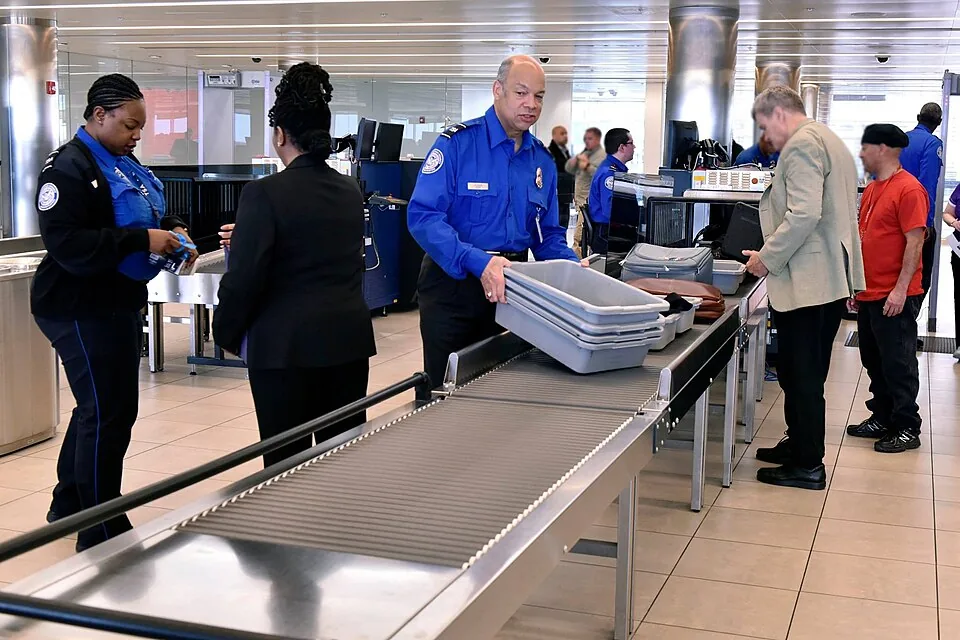
Twenty-five years after the September 11 attacks permanently rewired how Americans think about airport security, the TSA has quietly decided that actually, maybe letting people without plane tickets past the checkpoint is fine again. The agency's new 'Gateside by TSA PreCheck' program does exactly that. No ticket required. Just an application, an approval, and a PreCheck membership.
So What Exactly Is This Program
According to NPR, the TSA is allowing eligible PreCheck members who aren't flying to apply for gate access at 13 airports across the country. The list includes Los Angeles International, Dallas-Fort Worth, Harry Reid International in Las Vegas, and Salt Lake City International, with more airports reportedly on the way.
The program is free, but it's not a walk-up situation. Interested members have to apply online one to three days before their planned visit and wait for approval before showing up at the airport. If they get the green light, they pass through a PreCheck lane with a valid ID. The passes cover one calendar day and allow multiple re-entries. TSA says members of other trusted traveler programs with a Known Traveler Number can also apply.
The stated purpose, per TSA's own website, is to bring back 'the moments that once defined air travel' — things like walking a loved one to the gate, meeting a friend during a layover, or browsing overpriced airport restaurants without the commitment of actually going anywhere.
What We Used to Have and What Changed
Before September 11, 2001, none of this required a program or an application. You just went to the airport. Relatives, friends, curious strangers — anyone could walk to the gate, watch planes board, and wave goodbye through the window like it was a movie. It was completely normal.
The attacks changed that overnight. The overhaul of American airport security that followed was sweeping, fast, and in many respects, permanent. The TSA itself was created in the wake of 9/11. The PreCheck program that now powers this new gate-access experiment didn't exist until 2011. The idea that non-ticketed passengers could ever return to the gate areas seemed, for a long time, like one of those pre-9/11 things that was simply gone forever, filed alongside taking a full water bottle through security and knowing what your gate was before you got in the car.
Now, 25 years later, the TSA is threading the needle between nostalgia and security theater, bringing back the gate goodbye for a specific, vetted slice of the traveling public.
The 'Trusted Traveler' Angle Matters Here
This program doesn't exist for everyone, and that's the whole point. The TSA is not throwing open the security doors. It's extending a conditional privilege to people who have already submitted to background checks, paid enrollment fees, and been deemed low-risk by the federal government.
TSA PreCheck members have biometric data on file. They've been vetted. The Known Traveler Number system that also qualifies applicants runs through programs like Global Entry, NEXUS, and SENTRI — all of which require federal background checks. The TSA is essentially arguing that if the government already trusts you enough to walk through security without taking off your shoes, it can probably also trust you to stand at a gate and eat a fifteen-dollar sandwich without buying a ticket.
Whether you find that logic reassuring or mildly unsettling probably depends on how much faith you have in federal vetting systems in the year 2026, which is, to put it diplomatically, a complicated question.
The Timing Is Impossible to Ignore
The TSA announced this program in the same week that America is marking the 25th anniversary of September 11. The attacks that killed nearly 3,000 people, launched two decades of war, and reshaped every aspect of American air travel happened 25 years ago this week. The TSA chose right now to announce that we're quietly undoing one of the most visible security changes that came out of that day.
The agency says it plans to expand to more airports in the coming months. No timeline was given. No specific list of future locations was released. The rollout, like the application process itself, is measured and deliberate, which is probably the right call when you are, in effect, reopening a door that September 11 slammed shut.
The Dingo Take
You are supposed to look at this program and feel reassured by the word 'vetted.' And maybe you should. The TSA PreCheck population is not a random cross-section of the public. These are people who have actively sought federal clearance, paid for the privilege, and been approved. The security logic here is not insane on its face. The application process, the advance approval window, the limitation to specific trusted-traveler programs — these are real guardrails, not just window dressing.
But there is something genuinely strange about the timing. The TSA picked the 25th anniversary of the worst terrorist attack in American history to announce it's partially reversing the most symbolically significant security policy that attack produced. That is a bold editorial choice. Whether it reads as progress or as tonal blindness depends on who you ask, and right now the answer is probably both, depending on the day.
What this actually is, stripped of the nostalgia framing, is the federal government quietly monetizing trust. PreCheck costs money to join. Global Entry costs money. The people who get gate access under this program are largely people who could afford the enrollment fees years ago and remembered to renew. The wholesome send-off-at-the-gate image in TSA's press copy is real for some families. For others, the gate is still exactly where it's been since 2001 — somewhere past the checkpoint they can't reach.


Comments