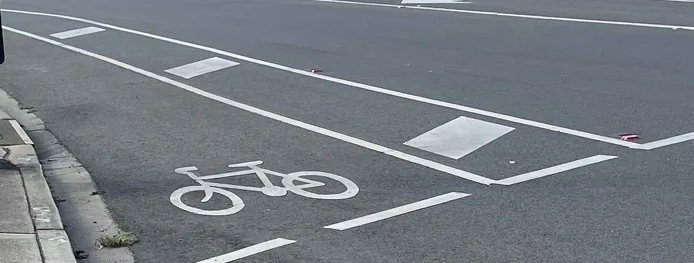
The Trump administration has decided that bike lanes are a form of diversity, equity, and inclusion, and is freezing or canceling federal grants to prove it. Not a parody. Not a bit. An actual policy position, from actual people, in an actual government that controls actual things. The United States has 4,400 directional miles of bike lane infrastructure, and the White House has apparently looked at all of it and said: too woke.
What They're Actually Doing
According to The Guardian, the Trump administration has been condemning what it calls "DEI bike lanes," freezing and canceling related federal grants, dismissing alternative transit options as unworkable in America, and floating the idea of removing lanes that already exist. The stated logic is that bike lanes take space from cars, create traffic congestion, and produce chaotic road conditions.
This is the official position. Someone wrote it down. Someone else approved it. Several people nodded along in a meeting. These are adults with salaries and health insurance and presumably the ability to ride bikes, all agreeing that the real problem with American roads is that cyclists have somewhere to go.
The DEI framing is doing a lot of heavy lifting here, and it's not clear it can carry the weight. Bike lanes don't discriminate in who they serve. Kids ride bikes. Retirees ride bikes. People who can't afford a car ride bikes. If cycling is exotic enough to count as diversity, someone needs to explain that to every eight-year-old on a Huffy who's been doing it for years without a federal grant or an equity initiative.
The Safety Argument They're Ignoring
The administration's traffic-congestion argument runs directly into a wall of inconvenient data. Studies show, as The Guardian notes, that bike lanes actually make roads safer by forcing drivers to slow down, which tends to reduce the number of incidents where a two-ton vehicle turns a cyclist into a cautionary tale.
Fewer cars on the road also means less congestion, not more. Every person on a bike is one fewer person in a car taking up a lane, idling at a light, and hunting for parking. This is not complicated math. It's subtraction.
But the administration's position seems to operate on the assumption that cars are infinite and permanent and bikes are an imposition, rather than an alternative. Which tells you something about who is doing the thinking here, and what they picture when they imagine the American road.
Where This Actually Comes From
The conservative hostility to bike lanes isn't really about traffic flow. It's about culture, and more specifically, about a particular strain of performative masculinity that has decided cycling is soft. The Guardian points out that Trump allies have spent years mocking Joe Biden and Pete Buttigieg for riding bikes, treating it as evidence of some fundamental unseriousness.
This is the same movement that turned a bicycle into a political liability for a sitting cabinet secretary. Think about that for a second. The Secretary of Transportation, a guy whose entire job is transportation, rides a bike, and this becomes an attack line.
So the policy follows the culture war. If bikes are coded as liberal and weak, then bike infrastructure is DEI, and DEI must be dismantled, and suddenly we're canceling federal grants for bike paths because Tucker Carlson decided pedaling looks effeminate. This is how American infrastructure policy gets made in 2026.
The Part Where It Gets More Absurd
The United States built those 4,400 directional miles of bike lanes over decades, starting in the 1960s, as The Guardian reports. That's not a radical progressive experiment. That's a long, bipartisan, incremental investment in giving people an option that doesn't require them to own, insure, fuel, and maintain a car.
Gas prices are high. Car ownership is expensive. Public transit in most American cities is a rolling act of faith. Bikes are cheap and they don't need a charging station or a fill-up. For a movement that spends considerable energy complaining about the cost of living, choosing this moment to kneecap one of the most affordable transportation options available to working Americans is a special kind of incoherent.
But here we are. Grants frozen. Lanes under threat. All because the ideological apparatus needed something new to label DEI, and someone in the West Wing looked out the window and saw a cyclist.
The Dingo Take
You are supposed to believe this is about traffic. It is not about traffic. It is about finding the word DEI and stapling it to anything the administration wants to cut, defund, or eliminate, and then daring anyone to defend bike lanes without sounding like they're reading from an HR manual. It's a rhetorical trick, and a pretty cheap one, but it's working well enough that it's now federal policy.
The actual consequences are real. Federal grants for cycling infrastructure build protected lanes. Protected lanes reduce cyclist deaths. Freezing those grants doesn't unclog highways or lower gas prices or make anyone's commute faster. It just makes some roads more dangerous for people who can't afford not to be on them. That's the part that should make you genuinely angry, underneath all the absurdity of watching a government treat a bicycle path like a civil rights conspiracy.
We've reached the point where the administration is fighting a culture war against asphalt. Against painted lines on a road. Against the radical idea that a person on a bike deserves not to get killed on the way to work. If they win this one, enjoy the victory lap. Just do it in a car, because the other option is apparently communism now.



Comments