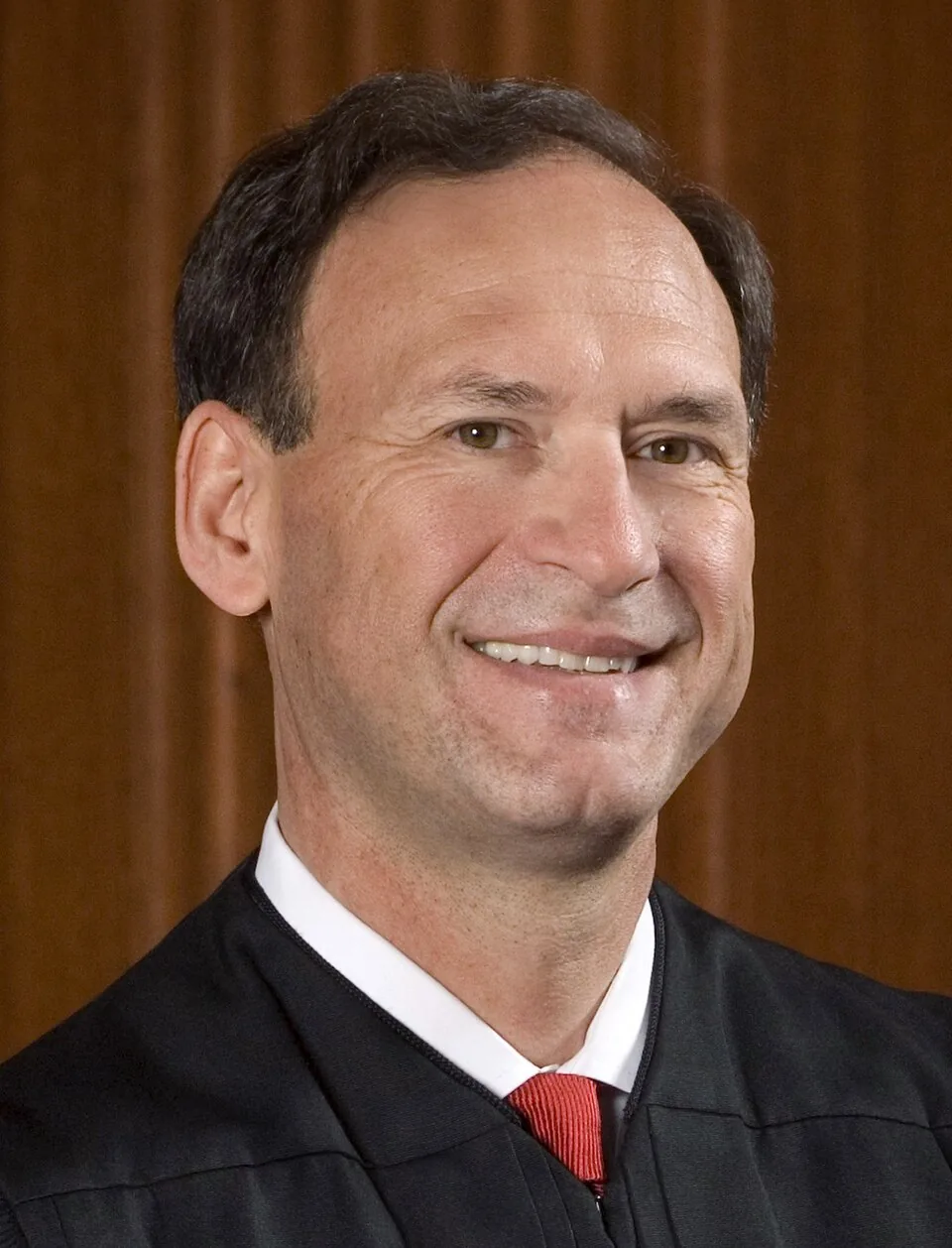
Samuel Alito spent months refusing to step aside from a landmark climate case that could hand the fossil fuel industry a billion-dollar legal shield — while holding stock in oil companies that stood to benefit from exactly that outcome. Then, one week before oral arguments, he quietly recused himself with a single sentence and no explanation. Cool system we've got here.
One Sentence, No Reason, Perfect Timing
The recusal notice, as CBS News reports, was a one-line letter signed by Supreme Court clerk Scott Harris and sent to lawyers on both sides of the case. It reads, in full: "Justice Alito has determined that he will not continue to participate in this case." That's it. No elaboration, no acknowledgment that ethics watchdogs had been raising alarms for months, no explanation of why now, seven months after the court agreed to hear the case in February.
Alito's move comes one week before the Supreme Court opens its new term with arguments in Suncor Energy and ExxonMobil v. Boulder, Colorado. The timing is, let's say, notable. Not notable enough to warrant a sentence of explanation, apparently, but notable.
What the Case Is Actually About
Boulder's lawsuit, filed in Colorado state court back in 2018, accuses ExxonMobil and Suncor of knowingly deceiving the public about the role fossil fuels play in driving climate change. According to CBS News, Boulder alleges the companies engaged in "unchecked production, promotion, refining, marketing and sale of fossil fuels" while concealing or misrepresenting the dangers — contributing to rising greenhouse gas concentrations, warming oceans, larger wildfires, and cascading damage that the city says has cost and will continue to cost it billions of dollars.
The energy companies fought to move the case to federal court, failed, then tried to get it dismissed entirely. They lost that too. The Colorado Supreme Court allowed Boulder's case to proceed, which is how the dispute landed at the U.S. Supreme Court. Exxon and Suncor, backed by the Trump administration, are now asking the justices to shut the whole thing down, arguing that state courts are the wrong venue for what they frame as a global issue better handled at the federal level.
Scores of similar lawsuits brought by states and local governments across the country are watching this case closely. The outcome could gut all of them.
The Stock Problem He Said Wasn't a Problem
Here is where it gets uncomfortable. According to his 2025 financial disclosure, Alito holds stock in ConocoPhillips and Phillips 66, two major oil and gas companies. He does not hold stock directly in ExxonMobil or Suncor, which is apparently the technical out he was using to justify staying on the case all these months.
Consumer Watchdog wasn't buying that reasoning. The Guardian reports that the group argued Alito could indirectly benefit from a ruling in the industry's favor, given that a sweeping decision protecting oil companies from state-court climate suits would benefit the entire sector, not just the two named defendants. The group pointed to the Supreme Court's own recently adopted code of ethics, which says justices should recuse when they or their families have a financial interest in the "subject matter or controversy" at stake.
Organizing director Alexandra Nagy put it plainly after the recusal was announced. "Justice Alito's recusal from Suncor v Boulder is the right decision," she told The Guardian, "and one he should have made from the start."
A Pattern He's Established Before
To be fair to Alito, and we say this with genuine reluctance, this is not a completely unprecedented move for him. The Guardian notes that he has previously recused himself from other cases involving companies where he holds stock. So the mechanism exists. He knows how it works. He has used it before.
Which makes his months of resistance in this particular case even harder to explain away as anything other than a deliberate choice to remain in a case with obvious financial conflicts until the pressure became impossible to ignore. A code of ethics that produces results only after sustained public shaming is doing the bare minimum the word "ethics" requires.
What Happens Now
With Alito out, the court will hear arguments in the climate case with eight justices instead of nine. That makes a 4-4 tie possible if the court's remaining conservatives and liberals split down the middle. A tied Supreme Court means the lower court decision stands, which in this case would be the Colorado Supreme Court's ruling allowing Boulder's lawsuit to proceed.
That's not nothing. But it also doesn't mean Boulder wins. The remaining conservative majority is still intact and could rule against the city. The case is enormously consequential either way. If the justices side with Exxon and Suncor, it could effectively immunize the fossil fuel industry from the wave of state-level climate accountability suits that have been building for years. Billions of dollars in potential damages and years of litigation across multiple jurisdictions hang on what this court decides.
The Dingo Take
Samuel Alito owned oil stocks. He sat on a case that could protect the oil industry from billions of dollars in liability. He resisted calls to step down for seven months. Then he stepped down one week before arguments with zero explanation. You are supposed to read that sequence of events and feel reassured that the system worked.
It did not work. A code of ethics that functions only as a vague suggestion, enforced by no one, producing results only when the public embarrassment reaches a sufficient volume, is not an ethics code. It's a press release. The Supreme Court adopted its conduct code in late 2023 after years of scandals involving undisclosed gifts and travel, and justified its toothlessness by pointing to judicial independence. What it actually produced is a regime where justices decide for themselves when their own conflicts of interest matter. Alito decided his didn't. Then he decided they did. Nothing happened in between except bad press.
The deeper problem here isn't even Alito specifically. It's that the most powerful court in the country operates with less external accountability than a mid-sized county government. No enforcement mechanism. No independent arbiter. Justices policing themselves with results like this. Meanwhile, the case they're about to hear without him could determine whether fossil fuel companies ever face meaningful consequences in any American courtroom for what they knew, when they knew it, and what they chose to hide. The stakes couldn't be higher. The oversight couldn't be thinner.

Comments