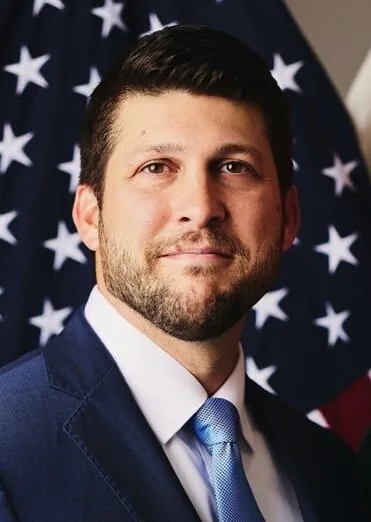
Florida Attorney General James Uthmeier has gone to court to slap an emergency injunction on OpenAI and ChatGPT, arguing the company is incapable of policing its own product. He posted a video to X telling Sam Altman's company to stop calling the technology safe, stop pretending it's human, and stop selling it to kids. When a sitting state AG is going to the courts because he doesn't trust a tech company to behave like an adult, something has gone badly wrong.
What Uthmeier Actually Said
The video Uthmeier posted to X on Monday was not the careful, lawyerly statement you'd expect from someone filing a major legal action. It was a list of demands delivered like a disappointed parent at the end of a very long day. "Stop calling it safe," he said. "Stop pretending it's human. Stop selling it to kids."
According to Axios, Uthmeier's core legal claim is that OpenAI lacks the ability to properly regulate its own technology. That's not a small accusation. That's saying one of the most powerful and well-funded AI companies on the planet, a company valued in the hundreds of billions and backed by Microsoft, has lost control of what it built.
He also took a direct shot at Altman personally, saying that if the OpenAI CEO meant what he's said publicly about wanting to slow down AI development, he could prove it by joining the ask to the court. Which is a way of saying: we'll see if you mean it. The implication being that Altman almost certainly does not mean it.
The Bigger Legal Question Here
As Axios points out, this fight carries implications far beyond Florida's borders. The federal government has, under the current administration, shown zero appetite for putting meaningful guardrails on AI companies. That's left states to figure it out on their own, and Florida is now testing just how far a state can legally go to restrict a major tech company when Washington won't.
This is an emergency injunction request, which means Uthmeier isn't just filing a complaint and waiting two years for it to wind through the courts. He's asking a judge to act right now, on the grounds that the harm is ongoing and urgent. Courts don't grant those easily. To get one, you generally have to convince a judge that real damage is happening and that waiting for a full trial would make things worse.
The fact that he's swinging for emergency relief tells you Florida thinks this is a five-alarm situation, not a policy disagreement to be hashed out over depositions and discovery.
OpenAI's Ongoing Safety Problem
OpenAI has spent years insisting it takes safety seriously while simultaneously racing to ship products faster than any meaningful oversight framework could possibly keep up with. The company has a safety board. It has published responsible AI principles. It has sat in front of Congress and said the right things.
And yet here we are, with a state attorney general in court arguing the company fundamentally cannot be trusted to self-regulate. That is not a fringe position. A significant number of OpenAI's own former employees have made essentially the same argument, some of them loudly and publicly, after walking out the door.
The specific allegation about selling to kids is worth sitting with for a moment. ChatGPT is rated for users 13 and older in the United States. Researchers and parents have documented minors using it for everything from homework to deeply inappropriate conversations that the system failed to block. Whether or not Florida can make the legal case stick, the underlying concern is not manufactured.
Sam Altman's Convenient Conscience
Uthmeier's challenge to Altman is genuinely clever, and also genuinely unlikely to produce the result he's suggesting. Altman has said, in various forms and forums, that he worries about what AI might do to the world. He has called for regulation. He has testified before Congress. He has performed concern at a very high professional level.
He has also presided over an acceleration of ChatGPT's capabilities and reach that shows no sign of slowing down. The company recently launched voice features that make the product sound more human, not less. It has expanded its user base aggressively. It is valued at more than a hundred billion dollars and burning through cash to stay ahead of Google and Anthropic and a dozen other competitors.
The idea that Altman is going to file a brief supporting a Florida injunction against his own product is roughly as likely as him donating his severance to the AI safety researchers he's repeatedly clashed with. But Uthmeier knows that. The point of the dare isn't to win the dare. It's to make Altman's silence speak for itself.
States Are on Their Own
The federal vacuum here is enormous and getting larger. Congress has held hearings on AI. Senators have introduced bills. Some of those bills have gotten committee votes. None of them have become law. The current administration has been actively hostile to federal AI regulation, preferring to frame guardrails as anti-innovation obstacles rather than basic consumer protection.
So states are improvising. California has tried and partially failed. Texas is moving. And now Florida, which is not exactly known as a hotbed of tech skepticism given how aggressively its current political leadership has courted business, is going to court against one of the biggest companies in Silicon Valley.
The legal theory Uthmeier is testing, that a state can compel an AI company to meet safety standards the federal government won't require, is genuinely uncharted territory. Courts are going to have to figure out where the lines are. Florida just volunteered to be the test case.
The Dingo Take
You are supposed to believe that a trillion-dollar industry building technology its own creators describe as potentially civilization-ending is best left to regulate itself, because the alternative is government interference and government interference is always bad. That's the argument. That's the whole argument. Florida's attorney general just asked a court to say, in legal terms, no it isn't.
The cynical read here is that Uthmeier is a Republican politician doing this for the attention, and the attention is real, but that doesn't make the underlying complaint wrong. OpenAI has built something genuinely powerful, genuinely unpredictable, and genuinely accessible to children, and its safety record is a collection of press releases and vibes. If the federal government won't act and the companies won't self-regulate, someone is going to have to test this in court eventually. Might as well be Florida.
Altman will not join the injunction request. OpenAI will fight this aggressively and probably win on jurisdictional grounds before anyone has to seriously engage with the substance. The company will issue a statement about its deep commitment to responsible AI. ChatGPT will continue to be available to thirteen-year-olds and also to the millions of people under thirteen who just lie about their age. And then the next state will try something slightly different, and we'll do this whole dance again.



Comments