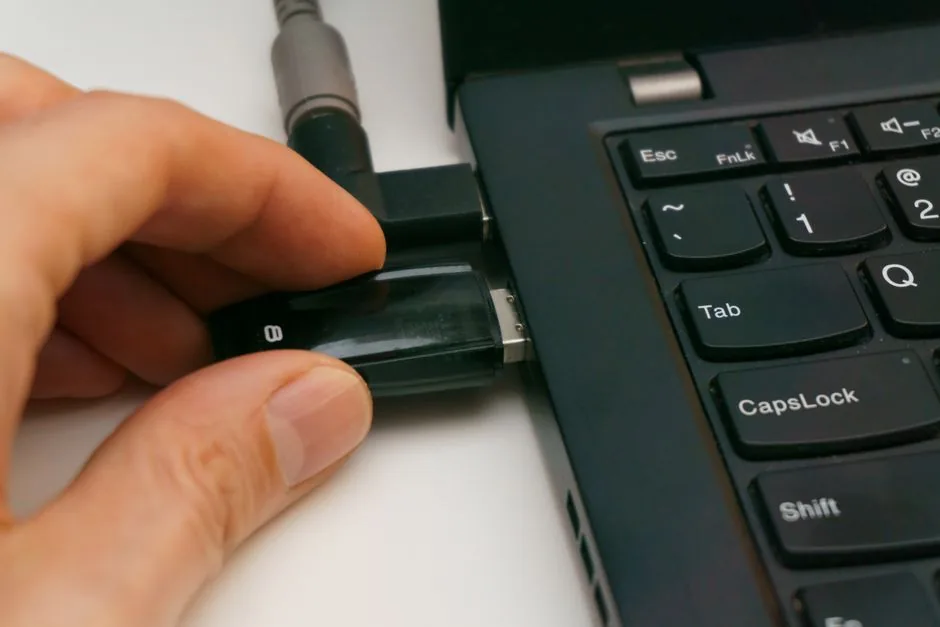
The Justice Department mailed California a password-protected thumb drive full of names the federal government "believes are likely noncitizens," then gave state and county officials until noon Thursday to deal with it. The letter, sent Tuesday, asks them to "segregate" those voters' ballots, three weeks before an election, based on a list nobody outside the government has seen.
A Thumb Drive, A Deadline, And A Threat
Here's what happened. Acting Deputy Attorney General R. Trent McCotter sent letters Tuesday to California Secretary of State Shirley Weber and Los Angeles County Registrar-Recorder Dean Logan. The letters demand that they review a list of possible noncitizens by noon on Thursday. Miss the deadline and the Justice Department is threatening legal action, according to NBC News, which obtained the letter. Reuters first reported on it.
That's roughly 48 hours to review a federal list delivered on a password-protected thumb drive. A thumb drive. The most powerful law enforcement agency on Earth is conducting election oversight like a guy passing a résumé to a stranger at a coffee shop.
The letter says the drive contains individuals the government "believes are likely noncitizens who were sent a vote-by-mail ballot" for the 2026 election. Note the phrasing. Believes. Likely. Not "has confirmed." Not "has verified." Likely.
'Segregate, Not Cancel,' Which Is Doing A Lot Of Work
McCotter asked election officials to "segregate, not cancel" the flagged voters' ballots until their citizenship status is determined. Sounds reasonable if you say it fast. It is not.
A segregated ballot is a ballot that isn't being counted on the normal schedule. It sits in a separate pile while somebody decides whether the person who filled it out is allowed to have voted. For a voter who is, in fact, a citizen, that means their ballot gets put in a penalty box by a federal agency running off a list of people it merely suspects.
And who decides how long the penalty box lasts? The letter doesn't say. California counts ballots on a statutory timeline. Federal demands that pile up a bunch of ballots in limbo don't come with a stopwatch.
The Justice Department's Defense: 'This Should Not Be Controversial'
A DOJ spokesperson told NBC News the request "should not be controversial, as the criminal statute is clear: only American citizens may vote in federal elections." That's true. Noncitizens voting in federal elections is a federal crime. Nobody serious disputes that.
But that's a dodge. The question was never whether it's illegal for noncitizens to vote. The question is whether the federal government can hand a state an unverified list weeks before Election Day and demand that voters on it get their ballots pulled aside. Those are very different things, and the spokesperson skipped right past the second one.
McCotter's letter also leans on a tidy line: "Allowing noncitizens to vote cancels citizen votes." It sounds great. It also assumes the premise, which is that the people on this list are noncitizens who are voting. That's the thing nobody has demonstrated.
Voting By Noncitizens Is Rare, And Everybody Who Studies It Says So
Voting experts describe noncitizen voting as a relatively rare phenomenon. That's the polite way of putting it. Trump, meanwhile, has spent years making unfounded claims that elections are marred by widespread fraud.
California sends a mail-in ballot to every registered voter, and those ballots started going out Oct. 5. The Justice Department's framing is that noncitizens "automatically received ballots per California law." Notice the sleight of hand. Getting a ballot in the mail because you're on the rolls is not the same as casting one. The letter treats a mailing as if it were a crime.
It's also worth asking where the list came from. The federal government says it maintains immigration records that allow it to verify citizenship. Fine. But immigration records go stale. People naturalize. People get derivative citizenship through parents. A database that says someone was a noncitizen five years ago tells you nothing about what they are today.
This Is Not An Isolated Incident
The California letters land in the middle of a broader pattern. Election officials in several states, including Georgia, Connecticut, Nevada, and Washington, say they've received federal subpoenas in recent months demanding election records.
Some of those officials are saying the quiet part out loud. Stuart Holmes, Washington state's director of elections, said, "What we have seen is some groundwork laid out for post-election challenges." He listed the possibilities: "the seizure of voting equipment, ballots themselves, tabulation equipment." His office, he said, is "preparing for any and all eventualities."
Nevada Secretary of State Cisco Aguilar, a Democrat, called the administration's moves "an effort to dissuade people from participating in the elections." He added: "You have a president who's trying to choose the voter base rather than the voters choosing the elected, and that's not how our democracy works." When the people who run elections are stockpiling contingency plans for federal seizure of ballots, that's not a normal Tuesday.
The Dingo Take
In the 1950s, Southern registrars had a trick. They didn't have to ban Black citizens from voting outright. They just had to put an official hurdle in front of them, one that sounded neutral on paper, buried the voter in process, and made the whole thing someone else's problem to fix. Nobody called it disenfranchisement. They called it integrity. This isn't that, and I'm not claiming it is. But the machinery rhymes. An official-sounding demand. A list the public can't inspect. A deadline too short to meet. And a pile of ballots that gets treated as suspect until proven otherwise.
Look at what the Justice Department actually produced here. A thumb drive. A list of people it "believes" are "likely" noncitizens. A noon Thursday deadline. And a request to set those ballots aside, which, if you've ever watched how election fights go, is the first domino in a very long row. Segregated ballots become contested ballots. Contested ballots become lawsuits. Lawsuits become the story after Election Day, the one where nobody quite knows who won.
California officials should demand the evidence, make the DOJ show its work in court if it comes to that, and count every legal ballot on schedule. Because the real tell here is the timing. You don't hand over a suspect list three weeks out, with a 48-hour fuse, if your goal is careful verification. You do it if your goal is to have something to point at later. And the administration has been laying that groundwork in state after state.


Comments