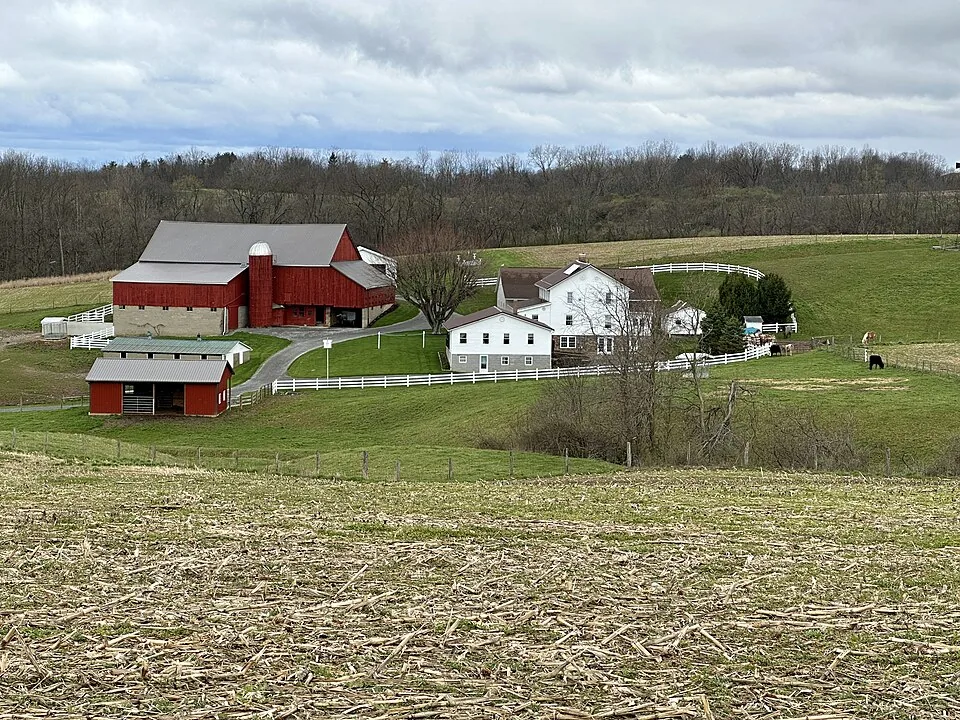
A vegetable farmer on the Ohio River says he's not sure he'll be able to get fertilizer next year, and he thinks the Republican running for Senate is "a crook." Welcome to the rural heartland, where the voters who were supposed to be the GOP's firewall are checking prices at the pump and the grocery store and doing some math the party won't like.
Ohio Is Back In Play, Somehow
Ohio used to be the swing state that picked presidents. Then it spent a decade turning red enough that national Democrats basically stopped returning its calls. According to NPR, this year is different: the races for governor and U.S. Senate are both toss-ups, and Democrats have a real shot at winning statewide.
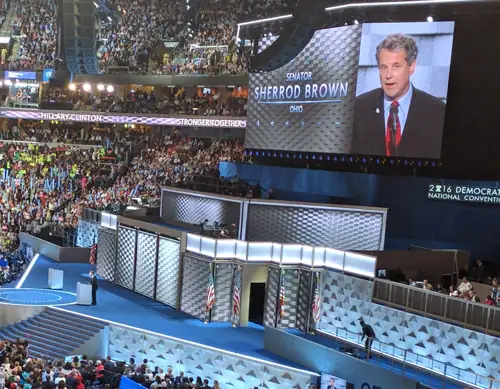
The Senate race pits Republican Sen. Jon Husted against former Democratic Sen. Sherrod Brown, and control of the chamber could run through it. Both campaigns are pouring effort into rural Ohio, the part of the state that was supposed to be settled business.
It isn't settled. Rural voters nationwide backed Trump by 40 points in 2024. Recent polling shows his approval in rural America dropping dramatically amid high inflation, tariffs and the war in Iran. Forty points is a lot of cushion. It is not an infinite amount of cushion.
The Table Nobody Expected At The Farmers Market
In Athens, home to Ohio University, the weekday farmers market is the kind of place where everybody knows everybody. Paige Walters, the market's promotions manager, noticed something new this year: the Athens County Republican Party set up a table for the first time in a while.
She took it as a sign the race is competitive. When a party that assumes it's winning shows up at a vegetable stand to make its case, it usually means somebody is worried.
Matthew White, an Athens resident, summed up the mood in one breath: "There's a lot of people in rural Ohio that are not happy, whether it's gas prices, diesel prices, the tariffs, the war." That's not a policy white paper. That's a grocery list of grievances, and every item on it is something Washington did or didn't do.
No Subsidies, No Insurance, No Fertilizer
Larry Cowdery runs a small multigenerational vegetable farm along the Ohio River in Long Bottom. He has two giant worries, and neither is abstract. The first is health insurance. Because he's self-employed, he has to buy coverage on the Affordable Care Act marketplace, and he says next year it's "going to be much more expensive."
He's right. Marketplace premiums in Ohio are expected to jump roughly 15%, partly because the federal subsidies expired. Republicans, Husted included, voted to eliminate them as part of the Trump-backed "One Big Beautiful Bill." The result was sticker shock so severe that Ohio, tied with Oklahoma, saw the biggest drop in marketplace enrollment in the nation. Nearly 33% of enrollees just disappeared from the rolls.
Cowdery's second worry is even more basic. "I'm not convinced we're even going to be able to get fertilizer next year," he said. Most of the nitrogen used in fertilizer moves through the Strait of Hormuz, which Iran controls and where traffic has been volatile because of the war. So the war a lot of these voters didn't ask for is now threatening whether a farm that's been in one family for generations can grow a squash.
Ten Bucks A Pound For Ground Beef
Dean Ferrell, 62, has lived in Athens his whole life. He told NPR gas, utilities and groceries have become a burden, and he's cut back on food he can't afford. "Who would ever thought you'd be paying ten bucks a pound for ground beef?" he said. "That used to be filet mignon prices."
He also made a point of looking on the bright side. Since he's older, he figures he doesn't eat as much as he used to, so that saves some money. Read that again. A grown man is treating a shrinking appetite as a household budgeting strategy.
Here's the wrinkle, and the Dingo Daily doesn't hide from it. Ferrell is an independent, hasn't decided on the Senate race, and says he's leaning toward Husted because he thinks "the far left has basically hijacked the Democrat Party." That's the other half of this story. Plenty of angry voters aren't automatically Democrats-in-waiting. Brown still has to close the deal.
The Farmer Who Built 560 Acres From A Pickup Truck
In Shelby County, Chris Gibbs is the kind of farmer politicians love to put in campaign ads. He's a first-generation farmer who started in 1983 with $2,500, a pickup truck and a two-year-old daughter, and built the operation up to 560 acres of corn, soybeans, alfalfa hay and a few dozen cows. He says he's been running a deficit for almost three years.
Farming has always been a gamble on weather, markets and trade policy. Add high fuel and fertilizer prices to that, and the gamble starts to look like a rigged game. These are not people who hate hard work. They are people being squeezed by decisions made in rooms they'll never enter.
The Dingo Take
The Republican bet on rural Ohio was that loyalty would outlast the price of diesel. It's not looking like a safe bet.
Think about what these voters are being asked to absorb. Insurance premiums up about 15% after their own senator helped kill the subsidies. Tariffs raising what they pay for inputs. A war that could choke off the fertilizer supply. And the price of ground beef treated like a luxury item. Cowdery calling Husted "a crook" isn't a party-line Democrat talking. It's a farmer who runs the numbers on his own survival and doesn't like the answer.
But don't get cocky, Democrats. Ferrell is still leaning Husted because he thinks the party has drifted too far left, and a lot of people in these counties feel the same way. Brown doesn't win rural Ohio by being the guy who isn't Trump. He wins it by showing up at the vegetable stand, talking about premiums and fertilizer, and sounding like he's lived in the same economy as the people buying the squash. Plenty of voters are ready to be persuaded. The question is whether anyone bothers to do the persuading.
Comments