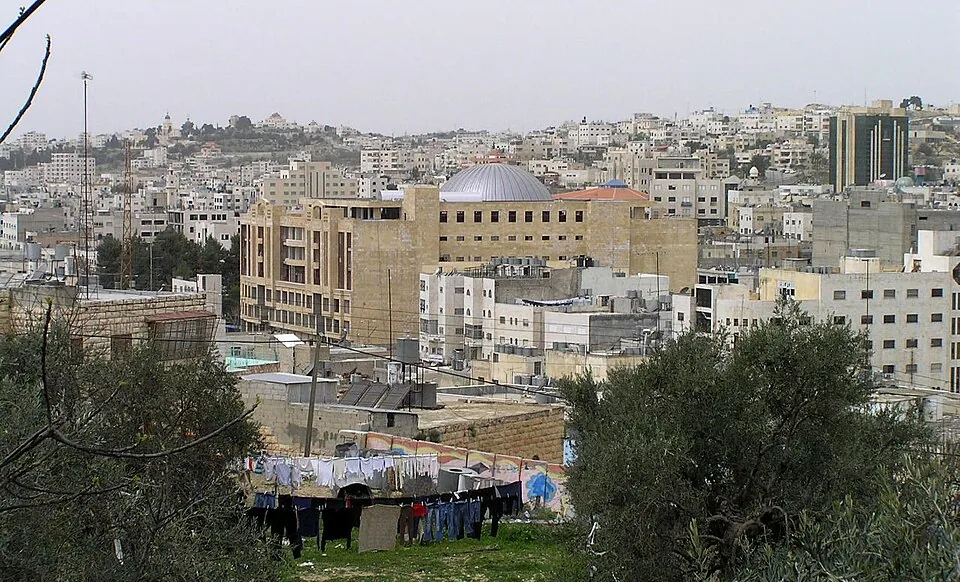
More than 2,200 people in Hebron, including nearly 200 children, have been pushed out of their homes since Friday, while every entrance and exit to the city stays sealed. The operation is happening days before an Israeli election that is widely seen as a referendum on Benjamin Netanyahu's handling of security. You do not need a political science degree to notice the overlap.
A City Locked From the Outside
The Israeli military kept up a massive operation across the occupied West Bank on Sunday, clamping down on movement ahead of Tuesday's vote, according to CBS News. The trigger was a gun attack in Hebron on Friday that killed two Israeli soldiers and wounded three others.
Since then, Hebron has been sealed. Nobody gets in. Nobody gets out. Mayor Yousef Zuhair Al-Jabari put it plainly: "People cannot reach or enter the city, and they cannot leave it. The blockade has affected every aspect of life."
Think about what that sentence means in practice. Medicine, work, school, getting to a relative's house. Every ordinary errand of a functioning city is now subject to a military checkpoint, and the checkpoint is closed.
The Numbers, Without the Spin
The Hebron municipality says more than 2,200 residents have been displaced, nearly 200 of them under 18. The epicenter of the operation is Deir Bahha and a section of the city called Al-Jalda.
The Israeli military says it operated in more than 400 locations over the weekend and arrested 40 Palestinians it claims are affiliated with Hamas or Palestinian Islamic Jihad. That is the military's characterization, and it's worth holding it next to the other figure on the table: 2,200 displaced people. Forty arrests on one side of the ledger, thousands of uprooted civilians on the other.
So who exactly is this operation aimed at? Because a sealed city punishes everyone inside it equally, and most of the people inside it did not shoot anybody.
Workers Locked Out Until the Polls Close
The military also announced that most Palestinian workers with permits will not be allowed into Israeli settlements for work on Sunday and Monday. Crossings into Israel stay closed until after Tuesday's election.
Read that again. The restriction does not expire when the security situation improves. It expires after the ballots are counted. The calendar is doing the talking here.
Palestinians who depend on those permits for their paychecks lose days of income. They don't get a vote in the election that is dictating their schedule.
Netanyahu Goes to the Scene
On Friday afternoon, Netanyahu and three members of his right-wing government gave statements from the site of the attack, vowing a forceful response. "We warned a few weeks ago about attempts by our enemies to harm us, our citizens and our soldiers ahead of the election," Netanyahu said. "We will act to destroy this place."
Notice who is mentioned in that sentence. Citizens, soldiers, and the election, all in one breath. The prime minister is running for reelection with President Trump's endorsement and, as CBS describes it, is under pressure to show a strong hand against Palestinian attackers to bolster his image with security-minded voters.
Two soldiers are dead. That is a real loss, and the anger in Israel is real. But a leader promising to "destroy this place" from the scene of an attack, days before voters head to the polls, is also doing something else, and everyone watching knows it.
The Context Nobody Gets to Skip
Six Israelis have been killed in West Bank attacks this year. During the same period, 112 Palestinians have been killed, according to the Ramallah-based Palestinian Health Ministry. The West Bank is in the middle of a surge in violence, and the casualty gap is not subtle.
Roughly 3 million Palestinians and 540,000 Israeli settlers live in the territory, which Israel has occupied since the 1967 war. Hebron is among its most volatile cities and the only place where Jewish settlers live in the heart of a densely populated Palestinian area under Israeli military protection.
That arrangement is a pressure cooker by design. Put a settler enclave inside a Palestinian city, guard it with soldiers, and then act surprised when the soldiers become targets. Then respond by sealing the whole city and displacing thousands. This is not a new cycle. It just has an election attached to it this time.
The Dingo Take
Start with the 200 kids. Nearly 200 children under 18 are among the displaced in Hebron, and they have no idea who Netanyahu is running against or what a referendum is. They know they were moved out of their homes this weekend and that the city they live in is a locked box. Their mayor says the blockade touches every aspect of life, and he is not exaggerating for effect.
Now look at who gets to decide how all of this plays out. A prime minister with a Trump endorsement, who needs to look tough by Tuesday, ordering the kind of operation that photographs well for his base and lands hardest on people who cannot vote for him or against him. Maybe the timing is a coincidence. Maybe the closures lifting right after the polls close is a coincidence too. The coincidences keep arriving on schedule.
Here is the question the voters in Israel deserve to be asked and the world should keep asking: if collective punishment worked, would we still be counting 112 dead on one side and six on the other this year? Sealing a city does not stop the next gunman. It does hand the next recruiter a fresh pile of grievances and a few thousand new reasons to listen. But that is a problem for after Tuesday, and nobody running this show is thinking past Tuesday.


Comments