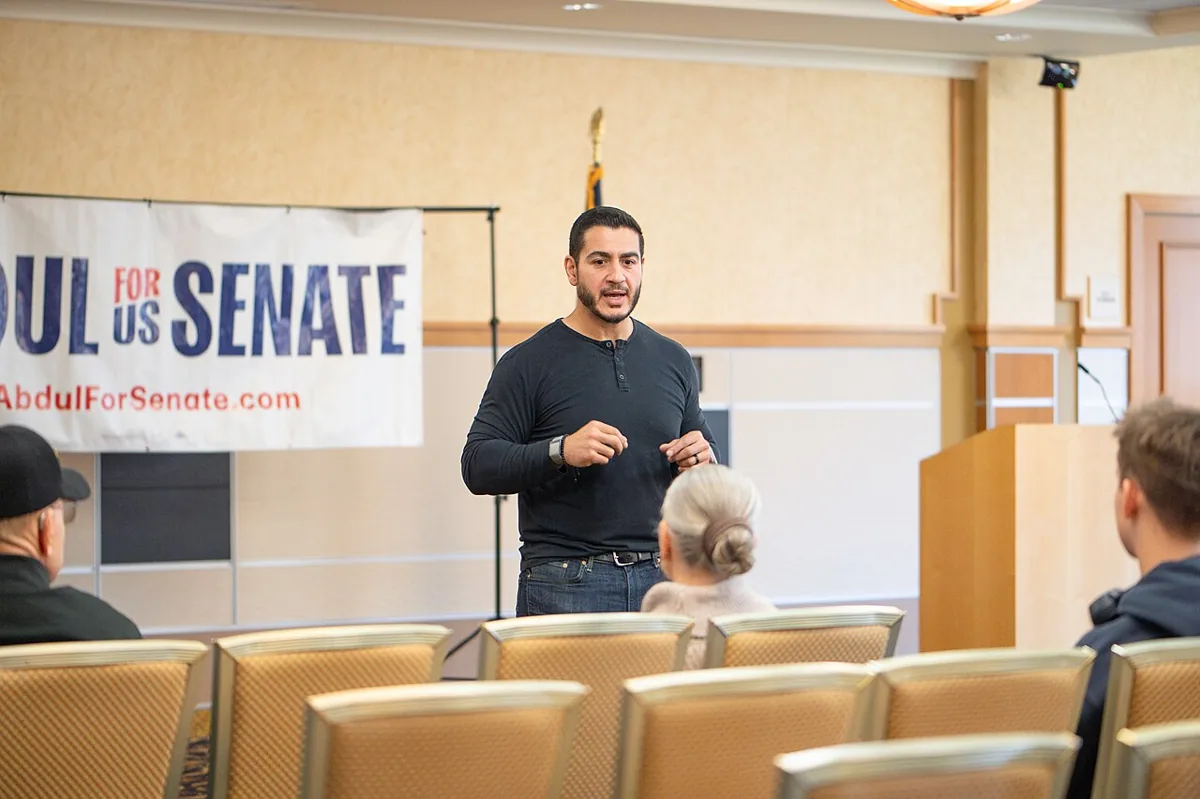
The president of the United States stood in front of a crowd in Port Huron and said he was there to stop "a jihadist Muslim Brotherhood member from becoming a United States senator." Michigan voters heard him out and then elected Abdul El-Sayed anyway, making him the first Muslim ever to win a seat in the Senate.
The Math Of A Historic Night
El-Sayed, a 42-year-old epidemiologist and former public health official, defeated Republican Mike Rogers in what both BBC News and NBC News described as one of the tightest and nastiest races of the cycle. The Associated Press called it early Wednesday morning. He will succeed retiring Democratic Sen. Gary Peters.
The win extends a drought Republicans probably don't enjoy thinking about. No Republican has won a Senate seat in Michigan since 1994, and Democrats have held this particular seat since 1979. It also helped cement Democratic control of the Senate after a wave of wins across the country, including in deep-red territory.
Supporters in the crowd chanted his name, held up a sea of phones, and shouted his slogan back at him like it was a stadium anthem: "Money out of politics, money in your pockets and Medicare for All." Several people were visibly crying. One woman told the BBC his win "makes us feel like we can stand a little taller."
The President Went Full Rally Villain
Let's be precise about what Trump did here, because it escalated in stages. Within days of El-Sayed's August primary win, Trump began falsely claiming that "jihadists" were gaining ground in American politics and government. He kept at it for three months.
At a rally in Youngstown, Ohio, he got a crowd chanting "Deport! Deport!" about a candidate who was born in Michigan. He routinely referred to El-Sayed by his middle name, Mohamed, the way a bully reads your full legal name off the attendance sheet. Then came Port Huron on October 25, where he made the Muslim Brotherhood accusation to the crowd and added, "that's the fact."
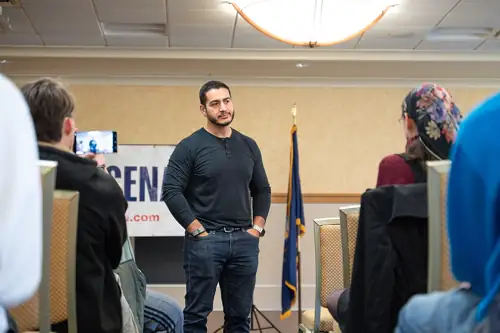
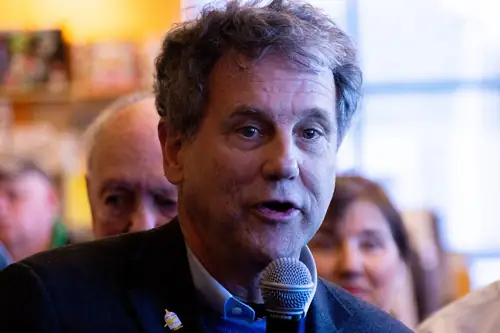
It is not a fact. El-Sayed has denounced the group and denied any ties to it. His response to the middle-name routine was to put it on a banner: "That'll be Sen. Mohamed to you, bro," he said at an event with Bernie Sanders the same day.
Rogers Wanted The Smear Without The Fingerprints
Mike Rogers, Trump's endorsed candidate, tried to have it both ways. He distanced himself from the most heated rhetoric while also accusing El-Sayed of harboring ties to the Muslim Brotherhood, an Islamist organization founded in Egypt in 1928 that the Trump administration has designated, in certain chapters, as terrorist. The BBC noted the attacks included baselessly tying El-Sayed to terrorism.
Here's the thing about trying to be the polite version of a smear: voters can read the same press release. Rogers also struggled to shake the president's shadow on the issues that actually cost people money. In the closing weeks he tried to put distance between himself and Trump's war in Iran and the tariffs, two developments NBC News said pushed prices up and compounded voters' economic worries.
Asked by NBC whether the Iran war was a mistake, Rogers offered this ringing defense: "Well, we'll find out. I don't think so." That's the confidence of a man who has been handed a lit firework and told it's a flashlight. NPR also noted Rogers lost his first Senate bid in 2024 and has embraced some of Trump's false claims about widespread election fraud, despite condemning them after January 6.
The Democrat Who Brought A Knife To Her Own Party
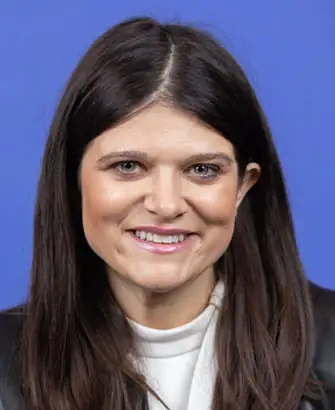
The strangest subplot belongs to Rep. Haley Stevens, who lost the primary to El-Sayed by about one percentage point, despite backing from heavyweights like Gov. Gretchen Whitmer and Sen. Peters. She had initially said she would support the Democratic ticket. Days before the general election, after attending church with Rogers on Sunday, she endorsed the Republican instead.
Democratic leadership called it "a despicable betrayal," and her staff reportedly resigned en masse. Stevens tied the switch to El-Sayed's position on Israel and to his campaign's suggestion that she wasn't welcome at his events once she ramped up her criticism. Voters who spoke with the BBC were confused, with some wondering whether she was simply acting out of anger.
It did nothing. El-Sayed brushed it off, telling reporters he doesn't "think about Haley Stevens" and that "none of this matters." A pro-Israel group affiliated with AIPAC had already spent more than $30 million trying to lift Stevens in the primary and re-engaged in the closing weeks of the general. Thirty million dollars, and the guy still won both elections.
He Is Not Exactly A Blank Slate
Fairness requires a few facts that make this less of a fairy tale. NPR reports El-Sayed is not a democratic socialist, though his campaign was backed by some of the biggest names on the left, including Sanders and Alexandria Ocasio-Cortez. His platform centered on single-payer health care, a wealth tax on billionaires, and getting corporate money out of politics. Polling during the race suggested the message was making inroads with Trump voters, which is the part Republican strategists should be losing sleep over.
His stances on Israel alienated some Jewish voters. He has described Israel's actions in Gaza as genocide and called for an end to US aid. NPR notes that comments he made after a truck-ramming attack at a synagogue preschool in metro Detroit drew criticism, and he later offered an apology. He also campaigned during the primary with the controversial left-wing streamer Hasan Piker. Those are legitimate things to argue about, and none of them are the same as being a terrorist, which is what the president kept implying.
What Michigan Told Washington
El-Sayed is the son of Egyptian immigrants who grew up in post-9/11 America, and he ran the health departments for Wayne County and the city of Detroit before this. His first run for governor, in 2018, didn't work out. This one did, in a state that voted for Biden in 2020 and Trump in 2024, and that now holds a prime spot in the 2028 presidential nominating calendar.
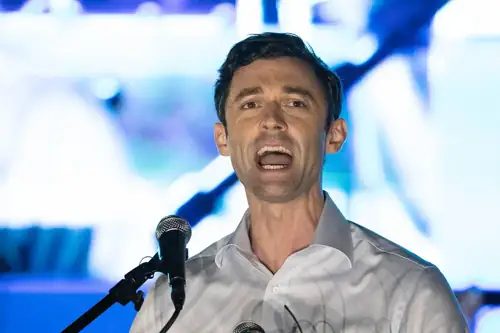
He wasn't shy in victory. He used the Arabic phrase "Alhamdulillah" in his speech, then trolled the other side: "for the rightwing ops, that just means praise be to God." He also said he relished that Vice President JD Vance, with whom he has tangled publicly, would be the one to swear him into the Senate. To Rogers, he offered: "Enjoy your retirement. You chose hate, and Michigan chose hope."
The Dingo Take
You are being asked to believe that this outcome was a fluke, a quirk of a good Democratic night, a protest vote that happened to land on a man with a funny name. Don't buy it. The sitting president of the United States spent three months telling Michigan that a native son was a jihadist, whipped a crowd into chanting "Deport!" at an American citizen, and bet the farm that bigotry would still move votes in a swing state. Michigan looked at the offer and passed.
That's worth sitting with, because the playbook wasn't subtle and it wasn't new. Call the candidate foreign. Use the middle name. Hint at terror ties and then act wounded when someone calls it Islamophobia. It has worked before. It didn't work here, partly because prices are up, a war is on, and voters seem more annoyed about their grocery bills than about the name on the ballot. Rogers couldn't run from the tariffs and the Iran war while also hugging the guy who started them.
So yes, congratulations to Sen.-elect Abdul El-Sayed, as he will be called in the Capitol. Now comes the harder part for his own side, because El-Sayed has made clear he plans to be a loud voice in the Democratic argument over what the party is for, and Michigan will matter a lot in 2028. The establishment tried to stop him in the primary, and one of its own tried to sink him in the general. He beat both. Maybe listen to him.
Comments