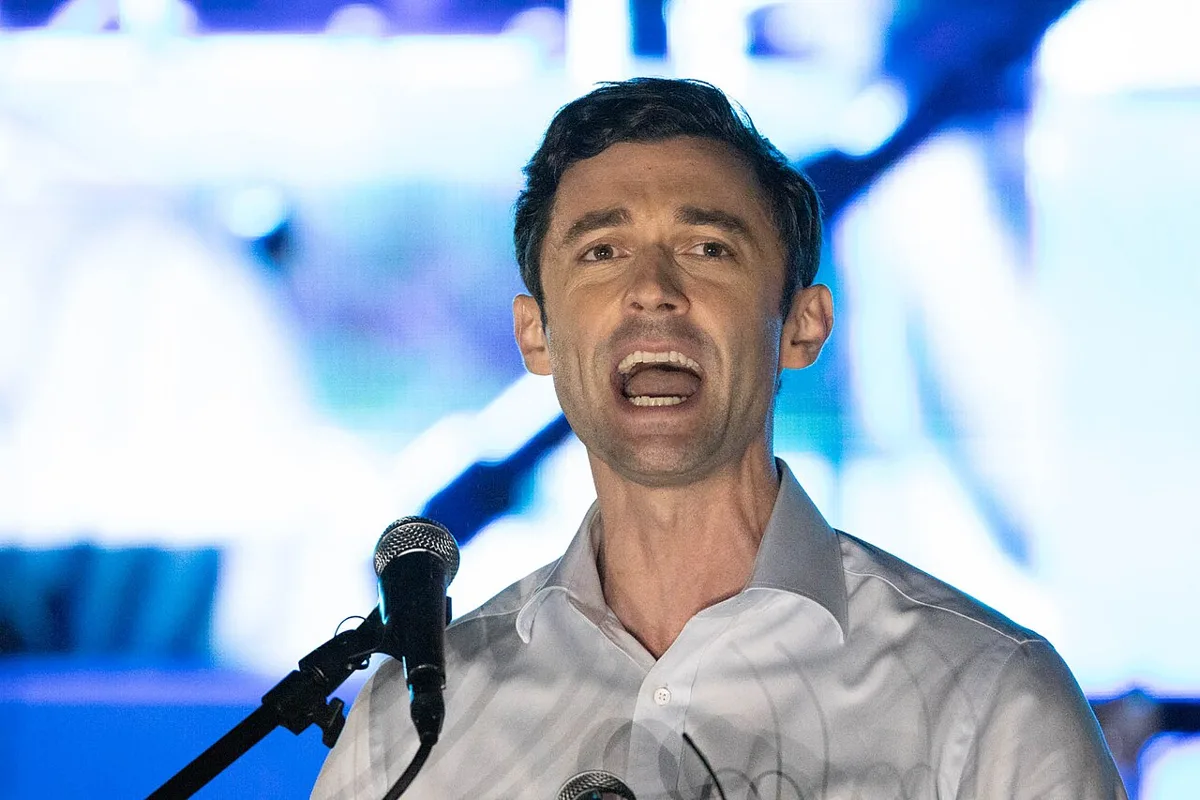
Georgia Republicans spent the 2026 cycle calling Jon Ossoff the most vulnerable Democrat in the Senate. On Tuesday night, he won re-election over Rep. Mike Collins with a huge money advantage and a polling lead, after a campaign in which Collins stood by Trump's tariffs and the Iran war while the rest of his party looked for the exits. Ossoff took an early lead when the polls closed, and it only grew as the night went on.
The Most Vulnerable Democrat Wasn't
Fox News and NBC News both projected Ossoff as the winner, and the outcome ends a very confident GOP narrative. At the start of the cycle, Georgia sat atop the Republican target list. The plan was simple: flip the seat, protect the 53-47 majority, go home early.
Instead, Ossoff cruised through renomination unopposed while stacking a massive war chest. Georgia keeps two Democratic senators, and Democrats also saw Mark Warner of Virginia projected to hold his seat on the same night.
The state has swung back and forth in recent years. Biden won it in 2020, Trump took it back in 2024, and Ossoff and Raphael Warnock both landed in the Senate through runoffs at the end of the 2020 cycle. Nobody gets to call Georgia a lock for either side. Ossoff just made the case that the Republican version of that argument has a lot of explaining to do.
A Primary Held Together by an Eleventh-Hour Endorsement
Collins did not exactly arrive in the general election with a unified party behind him. He came out of a combustible three-way primary against Rep. Buddy Carter and former college football coach Derek Dooley, who had the backing of term-limited Gov. Brian Kemp.
Collins and Dooley advanced to a June runoff, and Collins won it thanks in part to a last-minute Trump endorsement. So the Republican nominee for one of the most important Senate seats in the country got there by beating Kemp's pick with Trump's help, then had to face a general electorate that was increasingly unhappy with Trump.
That is a tough position to be in. It gets tougher when you decide to lean all the way in.
Collins Chose to Own the Iran War and the Tariffs
Here's the part that should be taught in political science classes. As Trump's approval rating kept dropping, Republicans across the country started finding policies to quietly disagree with. Tariffs and the war in Iran, both overwhelmingly unpopular, were the obvious ones. Rebrand the message, create a little daylight, survive.
Collins didn't do that. He defended the Iran war, repeating the administration's argument that Iran can't be allowed to have a nuclear weapon. He called the tariffs "fair," pointing to Georgia's major ports and trade with China. "Savannah Port and Brunswick Port have been on my mind," he said at a debate last month.
Ossoff made him own all of it. He repeatedly pushed Collins to defend the tariff regime and the war, which sent gas and diesel prices surging and raised the overall cost of living. When pressed on Trump's economy, Collins would brush off the questions and blame Biden. "That Bidenomics, that Green New Deal my opponent voted for, that's where this inflation came from," he said at their first debate. It is a little hard to pin inflation on the Green New Deal when voters are staring at the pump price from a war that started after the guy you're campaigning with took office.
The Staff, the Son-in-Law, and the Third Reich Line
Then there was the personal stuff, and there was a lot of it. Ossoff hammered Collins over social media posts by Collins' son-in-law, a far-right influencer, who shared Nazi imagery and antisemitic conspiracy theories and promoted white nationalist content. He also pointed to messages between a former Collins staffer and avowed white supremacist Nick Fuentes.
"You've hired half the Third Reich," Ossoff said at a debate last month. That is not a line you hear every day, and it was not delivered gently.
Collins said he doesn't support any form of racism or white nationalism. "I don't care where the source is, and I tell him that," he said of his son-in-law.
Ossoff also put Collins on defense over a House ethics investigation into whether he abused taxpayer funds by hiring the girlfriend of his former chief of staff for work she allegedly did not perform. Collins insists it's just a "complaint" with no merit. Add that to the pile and you start to understand why Republican money got shy.
Ossoff Wasn't Spotless, and the GOP Money Walked
Fair is fair. Ossoff took his own hits. Collins noted contributions to a pro-Ossoff super PAC from Reid Hoffman, a billionaire whose name appeared in the Epstein files. Ossoff fired back that Collins had taken votes to block full release of those files, which is the kind of exchange that makes everyone involved look slightly worse and nobody look better.
Collins also leaned on immigration, pointing to the Laken Riley Act, which he authored. The law requires detention of certain illegal immigrants who are arrested for, charged with, convicted of or admit to committing specified offenses. Ossoff voted for it, while criticizing the Trump administration's enforcement tactics. It was Collins' best card, and it didn't change the math.
What did change was the cash. GOP-aligned outside groups spent heavily early to cover Collins' fundraising deficit, then cut back substantially in the final weeks before Election Day. That is what giving up looks like when you're a donor. Nobody sends a press release. The checks just stop.
Ossoff's Victory Speech and the 2028 Chatter
In his victory speech, Ossoff said "the American people have rebuked the depravity, corruption, and incompetence of the failed lame duck President Donald J. Trump." Then he changed gears, thanking the Republican mayors, leaders, and the Republican and independent voters who joined his coalition. "Never doubt that unity is possible," he said.
His campaign speeches had been catching on with national Democrats all year, which fueled talk of a 2028 presidential run. Ossoff has said repeatedly that he has "zero interest" and pledged in a debate last month to serve a full six-year term if re-elected. Pundits will keep pretending not to hear that.
The Dingo Take
Collins called the tariffs "fair." That was the whole strategy. In a year when his own party was sprinting away from tariffs and the Iran war like they were radioactive, the Republican nominee in Georgia stood in a debate hall and defended both. Then he blamed the Green New Deal for the price of gas.
He lost with a House ethics probe over a no-show job, a son-in-law posting Nazi imagery, and a former staffer trading messages with Nick Fuentes hanging around his neck. Any one of those is a bad week. Stacked together, they're a campaign ad Ossoff didn't even have to write. And when Republican donors quietly turned off the spigot in the final weeks, they told you exactly what they thought of the candidate their party had spent a year hyping.
Democrats should enjoy this, but not too much. Ossoff had a massive money edge, a lead in most polls, and an opponent who kept handing him material. That is a good night, not a blueprint. If the lesson Democrats take is that Georgia is theirs now, they will be shocked the next time a Republican shows up who can say the word tariff without flinching. For tonight, though, a man who stood by the Iran war and the price hikes lost, and the people who paid for them in 2026 got to vote on it.
Comments