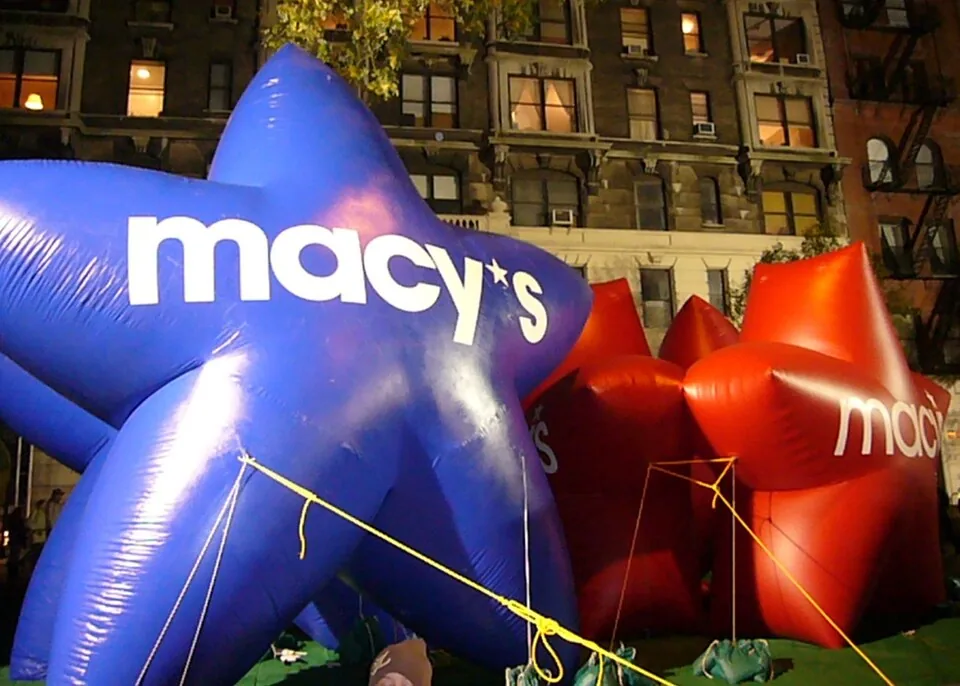
In 100 years of Macy's Thanksgiving parades, nothing has ever stopped the giant balloons from floating down Sixth Avenue. Not wars. Not the Depression. Not a pandemic. This year, a storm did it, and it also knocked out power to nearly a million homes and soaked the runways at Reagan National.
The Thanksgiving storm hit both coasts at once, which is the kind of overachieving we usually reserve for Congress during a shutdown.
Explain Like I'm 5 · 44-second video

Narrated and captioned. Made by The Dingo Daily from this article.
The Parade That Survived Everything Until Now
Let's start with the headline fact, because it's a good one. Macy's postponed its Thanksgiving Day parade to Saturday, the first postponement in the event's 100-year history. A century of balloons, marching bands, and Broadway casts lip-syncing in the cold, and it took a nor'easter to finally make the organizers blink.
The storm that did it brought high winds, heavy rain, and coastal flooding up and down the East Coast. Nearly 2 inches of rain fell on Central Park, making it the wettest Thanksgiving on record at that site, according to preliminary National Weather Service data. Washington DC also logged its wettest Thanksgiving on record.
So if your holiday plans got rained out, you're in historic company. The parade's own history just got a new footnote, and it's a damp one.
Nearly a Million Homes Went Dark
The power outages peaked at close to a million customers on Thursday evening, according to PowerOutage.us. More than 900,000 homes and businesses were without electricity as families sat down to dinner, most of them in East Coast states. Pennsylvania, Virginia, Maryland, and New Jersey took the worst of it, and Pennsylvania was still the hardest hit early Friday.
In Maryland, authorities asked almost two million customers to limit their water use to essentials because of intermittent power disruptions. Think about that for a second. The grid got so wobbly that the state had to ask people to go easy on the tap. Governor Josh Shapiro said Pennsylvania utility crews were working to restore power.
Nothing says a festive holiday like cooking a turkey by flashlight and being told to skimp on the dishwater.
Floodwaters, Closed Bridges, and a Very Wet Airport
The damage wasn't subtle. Bridges closed in Maryland because of severe winds. Waves battered Delaware beaches, and water seeped onto the boardwalk. In New Jersey, roads and bridges closed and floodwater blanketed city streets. An Ocean City blogger waded through water above his waist and summed it up for the internet: "This is wild."
Tidal waters surged and soaked the runways at Reagan Washington National Airport. Parts of some states are under states of emergency, including New York. The storm is expected to ease Friday and move into Nova Scotia and Newfoundland on Saturday, which gives the Northeast a drier weekend.
Enjoy it. Another deep area of low pressure is expected to arrive Monday, bringing more heavy rain, strong winds, and further travel disruption.
The West Coast Had Its Own Problem
While the East Coast was drowning in rain, the West Coast dealt with king tides, the exceptionally high tides that arrive when the sun and moon line up just so. Both San Diego and Los Angeles reported high tides of over 8 feet earlier this week, and beach-goers were told to stay away from the coast.
In Pacifica, south of San Francisco, large waves destroyed part of a pier and sent debris into the ocean. Amtrak cancelled several Pacific Surfliner trains because of "washout conditions from high tides." In Oregon, dramatic footage showed a man and a dog swept into the sea by a king tide. Both escaped unharmed, police said, which is the one genuinely good news item in this whole mess.
Coastal flood advisories remained in effect Friday in parts of northern California and Oregon, and the San Francisco area advisory runs through Sunday. The National Weather Service offered advice that works as a metaphor for the entire situation: never turn your back on the ocean.
Airports Became Purgatory
The holiday is one of the busiest travel stretches of the year, and AAA predicted 81.5 million Americans would travel at least 50 miles from home over a seven-day period. Those millions ran straight into the weather. More than 2,500 flights within, into, or out of the US were delayed on Thursday, and more than 450 were cancelled, according to FlightAware.
One passenger told the BBC he was stuck at LaGuardia for 13 hours while trying to reach friends in Chicago. Thirteen hours. You could have driven there, if the roads weren't flooded.
In Miami, a FedEx plane overshot the runway on Wednesday night, closing all but one runway for a brief period. No injuries were reported, and the FAA is investigating. An airport employee told CBS News that rain may have been a factor. Friday was expected to be another busy travel day, with hundreds more delays and cancellations already on the board.
Trump Will Consider Some Money
And what does the federal government have to offer? President Trump said he would consider releasing emergency funds. Consider. Not release. Consider. Hundreds of thousands of people sat in the dark, and the commander in chief offered to think about it.
That's the whole federal response so far, at least in the reporting available. New York is under a state of emergency, utilities are doing the heavy lifting, and the administration is mulling it over like a man deciding between the pie and the other pie.
The Dingo Take
Imagine a hurricane flattened a blue state and the governor of a red state had to wait while a Democratic president "considered" whether to release emergency funds. The Fox News chyron would write itself, and the phrase "abandoned Americans" would be on every screen by lunch. Hundreds of thousands of people lost power on Thanksgiving, New York is under a state of emergency, and the response from the White House is that it will think about money. Funny how the standard changes depending on whose voters are underwater.
Here's the part nobody wants to say out loud. Two coasts got hammered in the same week by two different kinds of water. King tides on one side, a nor'easter on the other, and a Macy's parade postponed for the first time in a century. We can argue about any single storm, but a pattern is a pattern, and the grid, the airports, and the coastlines are all built for weather that is no longer showing up. The utilities asked people to ration water because the lights flickered. That's not resilience. That's duct tape.
So here's the question for Monday, when the next low-pressure system rolls in. Is anyone in charge going to do more than consider something? Because the ocean is not considering. It's just arriving.



Comments