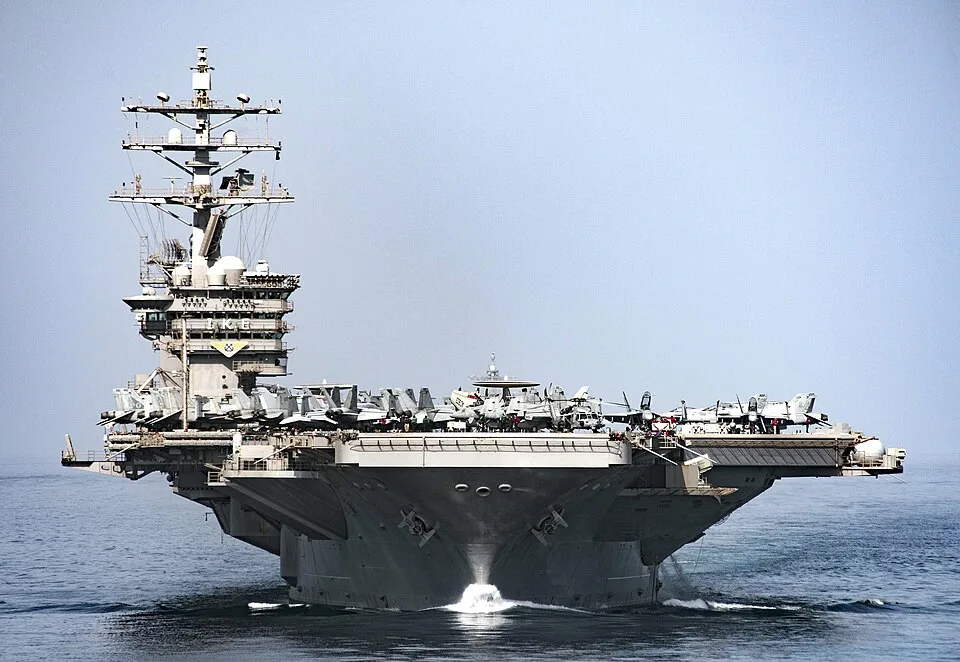
A Panama-flagged oil tanker carrying over two million barrels of crude oil took a drone strike to the hull at 4:30 in the morning, and that was the second commercial ship hit in two days. The US military bombed Iran in response, which was itself a response to a previous bombing, which was a response to a different drone strike. If you're keeping score at home, yes, this is exactly as bad as it sounds.
What Actually Happened, In Order
Here's the chain of events, because it matters. A drone hit a cargo ship called the M/V Ever Lovely in the Strait of Hormuz on Thursday. The US struck Iranian targets on Friday in retaliation. Iran was apparently given a chance to honor an existing ceasefire agreement and elected, in the words of US Central Command, to instead launch another one-way attack drone at a second vessel, the M/T Kiku, early Saturday morning.
The M/T Kiku is a Panama-flagged tanker. It was carrying more than two million barrels of crude oil when it got hit. Let that sit for a second. Two million barrels. In one of the world's most strategically critical waterways. This was not a warning shot.
Centcom confirmed Saturday's US strikes in a statement, saying they targeted what it described as 'Iranian military surveillance infrastructure, communication systems, air defense sites, drone storage facilities, and minelayer capabilities.' That is a fairly comprehensive list of things you blow up when you are very serious about making a point.
The Ceasefire That Isn't Really a Ceasefire
The Guardian reports that all of this is unfolding against the backdrop of a ceasefire agreement that is, to put it diplomatically, not holding together very well. Disagreements have surfaced over the terms of Iran's nuclear program, tolls in the Strait of Hormuz, and Iran's ballistic missiles program. So the ceasefire exists, technically, the way a screen door exists on a submarine.
Centcom's Saturday statement said the US 'would continue to enforce the shaky ceasefire' even as those disagreements pile up. The phrase 'shaky ceasefire' appears in The Guardian's reporting and it is doing an enormous amount of heavy lifting. Shaky might be the most diplomatic word applied to anything in recent memory.
The US military added that 'commercial vessel transits through the Strait of Hormuz continue.' Which is true! Ships are still moving. They are just occasionally getting hit by Iranian drones while they do it.
Why the Strait of Hormuz Matters So Much
For anyone who needs a quick geography refresher: the Strait of Hormuz is the narrow chokepoint between the Persian Gulf and the Gulf of Oman. Roughly a fifth of the world's oil supply passes through it. If you wanted to design a location where a military confrontation could immediately spike global oil prices and rattle every market on earth, you would design the Strait of Hormuz.
This is not a remote or abstract conflict. When oil tankers start taking drone strikes in the Strait of Hormuz, the price of gasoline, the cost of shipping, and the stability of global supply chains all feel it. The M/T Kiku had two million barrels on board when it was hit. That is not a skirmish. That is an economic event dressed up as a military one.
The Escalation Ladder Has No Top Step Visible
What we have now is a pattern: Iran hits a ship, the US hits Iran, Iran hits another ship, the US hits more targets in Iran. Centcom says US forces 'remain vigilant, lethal, and ready,' which is the kind of language you use when you are preparing to keep doing this, not when you are looking for an off-ramp.
The Guardian notes the US said it would continue enforcing the ceasefire agreement after Friday's strikes. Iran's answer to that was to drone another tanker before dawn on Saturday. Whatever Iran's calculation is here, 'backing down' does not appear to be part of it.
There is no indication yet of how many strikes the US carried out Saturday, what damage was done to Iranian military capability, or whether Iran has any intention of stopping. The statement from Centcom is confident in its tone and short on detail, which is how these statements always read in the early hours of something that may get considerably worse.
The Dingo Take
Let's be honest about what is happening here. The United States and Iran are in an active shooting war over a maritime chokepoint that carries a fifth of the world's oil supply, and it is escalating in 24-hour cycles. There is a ceasefire agreement that both sides claim to support and neither side appears to be honoring. Iran is targeting commercial ships with drones. The US is bombing Iranian military infrastructure. Two vessels have been hit in two days. This is not a flare-up. This is a pattern.
The thing about patterns like this is that they do not self-resolve. Someone makes a miscalculation, or a strike hits something it was not supposed to hit, or a tanker sinks instead of just taking damage, and suddenly the question of whether this is a 'limited conflict' gets answered in the worst possible way. Two million barrels of crude oil on a vessel that just took a drone strike is not a situation with a lot of margin for error.
Centcom says forces remain 'vigilant, lethal, and ready.' Great. What they have not said is what the endgame looks like, what would constitute a successful enforcement of this ceasefire, or what happens if Iran hits a third ship tomorrow morning. Those are not small questions. They are the only questions that matter right now, and nobody in an official capacity seems eager to answer them.


Comments