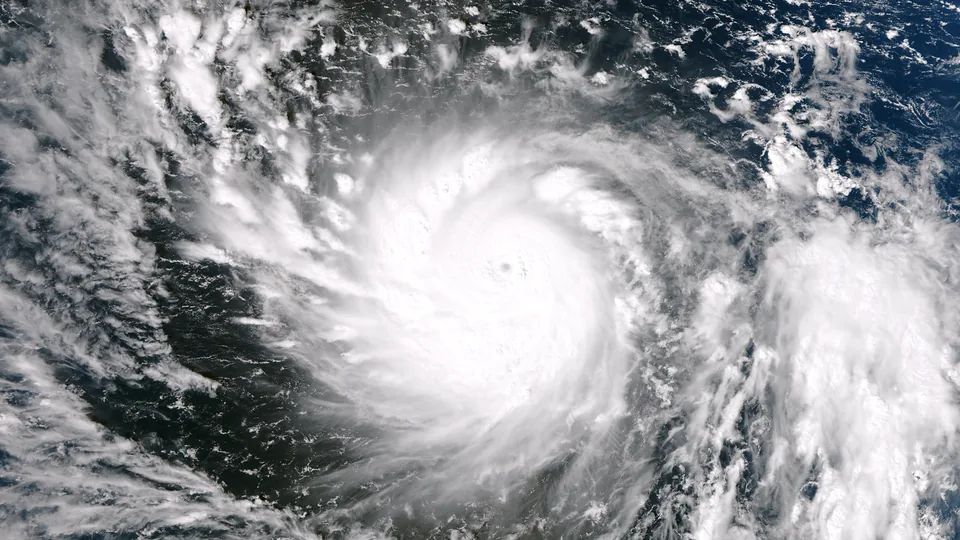
A super typhoon with winds expected to hit 180 miles per hour is bearing down on Guam and the Northern Mariana Islands right now, and the local meteorologist tracking it has been awake for nearly 24 hours calling it a "powerhouse" with a "near catastrophic" outlook for any island that takes a direct hit. Emergency shelters are already turning people away. The storm makes landfall Monday morning local time.
What We're Actually Dealing With Here
Super Typhoon Bavi is not a storm you ride out on your porch with a beer. As of Sunday, the Joint Information Center in Guam reported maximum sustained winds of 165 miles per hour, and the Joint Typhoon Warning Center is forecasting those winds will strengthen to 180 mph as Bavi passes over the islands. That is a major Category 5 equivalent. The kind of storm that ends conversations about whether you should have evacuated.
For context, the JTWC only designates storms as super typhoons when sustained winds hit 150 mph or greater in the western north Pacific. Bavi clears that bar by a lot. NPR reports the storm was moving north on Sunday and is expected to reach its closest point to Guam on Monday morning local time, bringing what officials are calling its most catastrophic impacts with it.
The National Weather Service has issued typhoon warnings for four populated islands: Guam, Rota, Tinian, and Saipan. Flash flood warnings are in effect across all four. Dozens of schools and hospitals are in the storm's path.
The Island in the Crosshairs
Local NWS meteorologist Landon Aydlett did not mince words when he spoke to NPR from central Guam just after 1:30 in the morning Monday local time. "This is a powerhouse super typhoon and this is going to be a very grim outlook for any island that takes a direct hit," he said, pointing specifically to Rota, a small island northeast of Guam. "It's going to be probably near catastrophic for the entire island."
Aydlett had been awake tracking the storm for nearly 24 hours by that point. He described conditions already deteriorating across all four populated islands, with torrential rain and strengthening winds. Power outages are already being reported across Guam. The Port Authority of Guam has suspended operations. Flights are canceled. His message to anyone still thinking about their options was blunt: "People need to hunker down wherever they are because it's just too dangerous to go out at this point."
Guam Governor Lou Leon Guerrero transitioned the island into a heightened state of emergency readiness on Sunday. "We want you to all be making sure that you are prepared," Guerrero said in a press briefing. "Be safe in your homes and please do not travel the roads, stay out of the waters and be safe." Andersen Air Force Base on Guam is restricting access to essential personnel only.
These Islands Were Already Struggling
Here is the part that makes this story hit differently. Guam and the Northern Marianas were not coming into this storm from a position of strength. Typhoon Sinlaku tore through the region back in April, and as NPR reports, many residents of Saipan and Tinian still had no power two and a half months later when Bavi started spinning up.
Aydlett flagged this directly. "We have a lot of vulnerable communities across northern Guam, people that live in more substandard building materials," he told NPR. "From what I've heard from Saipan and Tinian, where many people still have no power two-and-a-half months after Sinlaku ravaged those islands, the shelters are packed and they had to turn people away."
Read that again. Shelters are already turning people away. People still recovering from the last major typhoon, some still without power, now have nowhere to go as a stronger storm closes in. Local governments opened emergency shelters ahead of the storm and those shelters have been nearing capacity, with residents from low-lying areas and those living in wood and tin homes making up a large part of those seeking refuge.
The Numbers Behind the Danger
Guam's most populous village, Dededo, is among the areas under flash flood warnings. Isla Public Media, which has been covering the storm closely and contributed to NPR's reporting, has documented the scope of what the region is facing: catastrophic structural damage, widespread fallen trees, and prolonged power outages are all expected outcomes.
Aydlett said officials gave residents several days of warning before the storm arrived. Whether that was enough time for people who are already living without power, in substandard housing, with limited resources, is a different and harder question. "We aim for zero fatalities and my gosh, I hope that's how it turns out," he told NPR. "It's going to be a rough night and a rough day."
The Dingo Take
The United States has territories in the Pacific. Most Americans couldn't find them on a map without a hint. Guam and the Northern Mariana Islands are home to real people, American citizens and nationals, who just watched a Category 5 equivalent storm roll in on top of communities that never fully recovered from the last one. The shelters are full. The power is already going out. And this is the opening act.
There will be time later to talk about chronic underfunding of Pacific territorial infrastructure, about what it means that Saipan and Tinian were still without power more than two months after a previous typhoon, about why we only seem to remember these islands exist when a disaster forces them into the news cycle. For now, the only thing that matters is that Bavi is there and the people in its path need everything to go right tonight.
Aydlett said he aims for zero fatalities. That is the goal. That is the number. Let's hope the storm cooperates, because based on everything else in this story, it has given no indication that it plans to.



Comments