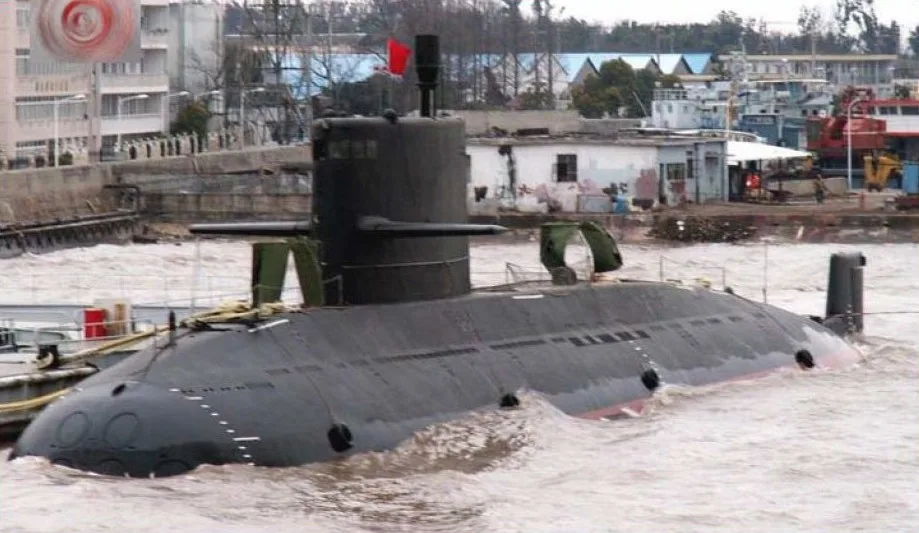
China fired a long-range ballistic missile from a nuclear-powered submarine into the South Pacific Nuclear Free Zone on Monday, the same zone China legally pledged in 1987 not to use for exactly this kind of thing. They gave New Zealand a few hours notice first, which is sort of like texting your neighbor that you're about to park on their lawn.
What Actually Happened
According to CBS News, China's People's Liberation Army launched the missile at 12:01 p.m. local time, carrying a dummy warhead. The official Xinhua News Agency announced the test, with China's Ministry of Defense dutifully reposting the statement. It was framed, as these things always are, as routine annual training that 'complied with international law and practice' and was 'not directed against any country or target.'
China last pulled this move two years ago, firing an intercontinental ballistic missile with a dummy warhead into the Pacific. So we are apparently doing this now on a regular schedule, like a very aggressive subscription service nobody signed up for.
About That 1986 Treaty
The South Pacific Nuclear Free Zone exists because of the Treaty of Rarotonga, signed in 1986. The whole point of the treaty is in the name. No nuclear weapons in the region. China ratified the relevant protocols in 1987, pledging specifically not to test nuclear weapons within the zone and not to threaten signatories with nuclear force.
Now, to be precise, the missile carried a dummy warhead, not a live nuclear device. China will lean hard on that distinction. But firing a ballistic missile from a nuclear submarine into a region where you have legally committed to not conducting nuclear weapons tests is, at minimum, a very aggressive interpretation of your own treaty obligations. At maximum, it is the kind of thing that makes your neighbors start building mutual defense pacts. Which, coincidentally, is exactly what happened on the same day.
The Timing Was Not Subtle
The missile launch happened on the exact same day that Australia and Fiji signed a new mutual defense treaty specifically designed to counter Chinese influence in the Pacific. CBS News confirmed the timing. You cannot buy that kind of dramatic irony.
Australia's Foreign Minister Penny Wong was literally in Fiji signing that treaty when reporters asked her about the test. 'Australia has been clear with China that we regard this as destabilizing to the region,' she said. Wong was being diplomatic. The situation was considerably less so.
How New Zealand Found Out
New Zealand's government was informed of the planned launch hours before it happened. Hours. Not days. Not weeks. Hours. They apparently had just enough time to register concern but not nearly enough time to do anything about it.
Foreign Minister Winston Peters was not having it. 'It appears that despite our long-standing concerns about this type of activity, China carried out the test within hours of informing us,' he told the Associated Press. That sentence is doing a lot of work. 'Long-standing concerns' is diplomat-speak for 'we have told you we hate this, repeatedly, and you did it anyway.' Peters has a well-earned reputation for bluntness, and even by his standards, this reads as barely contained fury wrapped in formal language.
Japan Was Also Not Thrilled
Tokyo received advance notice through the Japanese Embassy in Beijing before the launch, AFP reports. Japan's response was to 'strongly call for a rethink,' which the Chinese government then ignored by proceeding with the test anyway. So the rethink did not go great.
The joint Japanese government statement specifically flagged the possibility of the missile passing through Japan's airspace as a security concern. That is a remarkably specific worry to have to articulate out loud to another government. The fact that Japan had to say 'please do not fire missiles through our airspace' and China did it regardless tells you quite a bit about the current state of that relationship.
The Dingo Take
Here is what is actually going on. China is sending a message, and the message is not subtle. The day Australia and Fiji formalize a defense pact aimed at limiting Chinese regional influence, Beijing fires a ballistic missile from a nuclear submarine into a zone it promised to leave alone. That is not a coincidence. That is a press release delivered by the military.
The 'it was just a dummy warhead, it was just routine training' framing is the kind of thing you say when you want to do something provocative while maintaining plausible deniability about it being provocative. China knows what the Treaty of Rarotonga says. China ratified those protocols 38 years ago. The question of whether a dummy warhead technically violates the letter of the treaty is substantially less important than what it signals to every country in the Pacific about how seriously China takes its treaty obligations when they become inconvenient.
Australia, New Zealand, and Japan are now in the uncomfortable position of having registered serious protests that China acknowledged with the diplomatic equivalent of a shrug. What happens next is the actual story. The mutual defense treaty Australia just signed with Fiji looks considerably more urgent today than it did yesterday morning. That was probably the point.




Comments