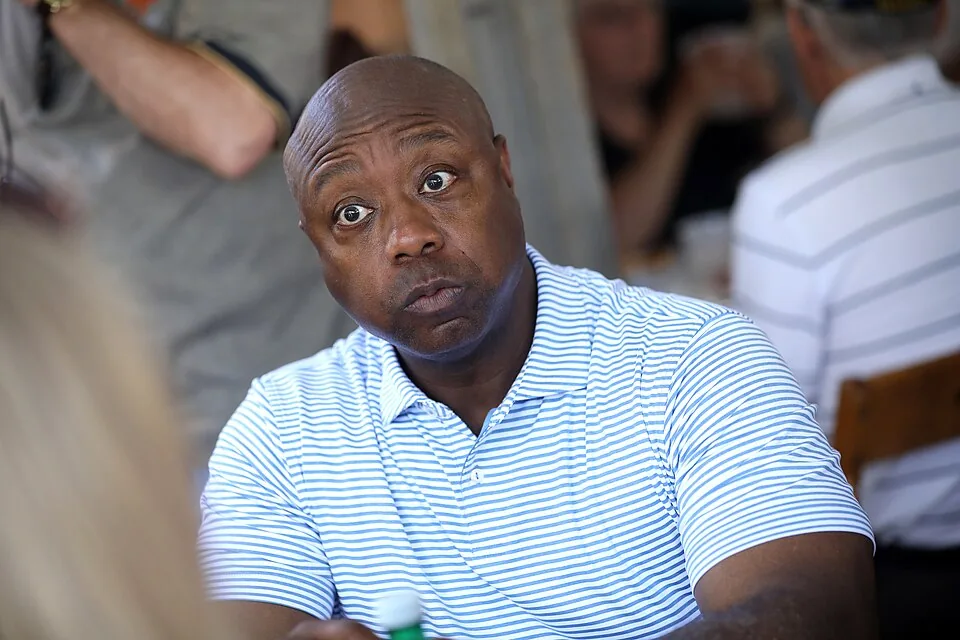
Six weeks before the midterms, the man in charge of keeping the Senate Republican called a closed-door meeting with his colleagues and told them, without apparent irony, that they are in the 'fight for our lives.' Tim Scott, chair of the National Republican Senatorial Committee, delivered that assessment Wednesday as his party stares down a record number of toss-up Senate races, an unpopular president, an ongoing war with Iran, and an electorate that is, to put it mildly, not in a great mood.
What Scott Actually Said in That Room
CBS News confirmed the details of the closed-door meeting through multiple people present. Scott laid it out plainly: the NRSC will concentrate its remaining spending on a tight cluster of races where Republicans are either holding defense or taking a swing at a Democratic seat. Maine, Texas, Ohio, Iowa, and Alaska are the defensive priorities. New Hampshire and Michigan are the targets.
He also told colleagues that a recent Supreme Court ruling striking down coordination limits between groups like the NRSC and individual campaigns gives them a financial tool they plan to use aggressively. Translation: expect a flood of cash in the final stretch, much of it now able to move in ways it legally couldn't before.
Scott tried to thread an optimistic needle by pointing to 2022, when Democrats defied expectations, kept the Senate, and outperformed their fundamentals despite Biden's brutal approval numbers. The implication being: bad presidential numbers don't automatically mean disaster for the Senate. It's a fair historical point. Whether it holds in 2026 depends on a lot of things going right for Republicans simultaneously.
The Map That Is Giving the GOP Nightmares
Start with Maine. Susan Collins is running for a sixth term in a state that has moved left in a hurry, against Democratic former state lawmaker Troy Jackson. Collins has beaten the odds before, winning by 8.6 points in 2020 despite being massively outspent. But she's done it in part by carefully maintaining a moderate brand that sits increasingly uneasily inside a party that has spent the last decade making that brand harder to sell.
North Carolina is a whole different problem. Republican Sen. Thom Tillis is retiring, and Democrats have recruited former Gov. Roy Cooper to run for the seat. Cooper is genuinely popular in a state Trump has won three times and most polls show Cooper ahead of Republican nominee Michael Whatley. Scott told the room Wednesday that internal polls show the race tightening, but Republicans pushing that line have obvious incentives to do so.
Then there's Texas, where a Democrat hasn't won statewide in over 30 years. The Democratic nominee is James Talarico, running against Attorney General Ken Paxton, who beat incumbent Sen. John Cornyn in the primary. Paxton is not exactly an uncontroversial figure. He has been impeached, investigated, and accused of corruption so many times that his Wikipedia page requires a table of contents. If Texas is competitive, something has gone seriously wrong for Republicans nationally.
Ohio, Iowa, Alaska: The Red-State Firewall Is Wobbling
Democrats are also pushing hard in Ohio and Iowa, two states that were swing states within living memory before drifting right. Both are listed by Scott as defensive priorities, which tells you everything about how the national environment is cutting. When you're spending to hold Iowa in a Senate race, things are not going great.
Alaska rounds out the defensive list, a red-leaning state with its own particular political quirks that have occasionally produced surprising results. Democrats clearly believe the map is wide enough this cycle to justify spreading resources across all three.
The thread connecting Ohio, Iowa, Texas, and Alaska is not complicated. According to CBS News, the political headwinds driving Republican vulnerability include Trump's sagging approval ratings, voter frustration with the cost of living, and, notably, widespread dissatisfaction with the Iran war. That last item is doing a lot of heavy lifting in this political environment and will continue to do so through November.
Where Republicans Think They Can Go on Offense
New Hampshire and Michigan represent the GOP's best pickup opportunities, both seats held by retiring Democrats. In New Hampshire, Republicans have nominated former Sen. John E. Sununu, who carries genuine name recognition from one of the state's most enduring political families. That's a real asset in a state where retail politics still matters.
Michigan is a more complicated bet. Democrats there ended up with progressive Abdul El-Sayed as their nominee after what CBS News describes as lingering fissures within the state party. Republicans are hoping those internal wounds haven't healed. Whether El-Sayed's nomination represents a liability or an enthusiasm driver for Democrats is one of the genuinely open questions of this cycle.
Georgia, meanwhile, appears to be quietly slipping off the Republican target list. Democratic Sen. Jon Ossoff is leading GOP nominee Rep. Mike Collins in most polling, and Republican sources told CBS News the party is actively weighing whether to pull back spending there entirely. That's the sound of a campaign committee making hard choices about where their money actually moves numbers.
The Math Republicans Are Working With
Here is the arithmetic Scott's colleagues were sitting with Wednesday. Republicans hold a 53-47 majority. They can lose three seats and still hold the chamber, with Vice President JD Vance available as a tiebreaker. That sounds like a comfortable cushion until you count up how many seats are genuinely in play.
Scott named seats in Maine, Texas, Ohio, Iowa, Alaska, and North Carolina as races requiring serious attention. That's six seats. Republicans need to hold all but three of them while also flipping New Hampshire and Michigan to stay above water. In a neutral political environment that might be manageable. In an environment shaped by an unpopular war, a president underwater on approvals, and economic anxiety, 'manageable' is doing a lot of work as a descriptor.
Historically, the party controlling the White House loses ground in midterms. That's not a talking point, it's nearly a law of political physics. The question is how much ground, and whether Scott's closed-door optimism reflects genuine internal data or the professional obligation of a campaign chair to keep his colleagues from walking into the next six weeks in a full panic.
The Dingo Take
Tim Scott is not a man prone to alarm. He is relentlessly, almost performatively upbeat, which makes the phrase 'fight for our lives' landing in a closed-door Republican meeting this close to the midterms worth sitting with for a moment. That's not spin. That's a warning.
The Republican Party is defending Senate seats in Texas. Texas. A state where Democrats haven't won statewide since 1994. They are spending defensive dollars in Iowa and Alaska. They are watching North Carolina, which Trump won three times, potentially slip toward a Democratic former governor who is actually popular with voters. All of this is happening because the president of the United States is dragging his party underwater with approval numbers tanked by a war and an economy that is making people angry at whoever is in charge. The fundamentals are not complicated.
Scott's 2022 analogy is clever but it cuts both ways. Yes, Democrats beat the midterm curse that year. They did it because they had a series of specific, motivating issues, disciplined candidates in key states, and an opponent that handed them gifts. Republicans are now the ones sitting in the White House. They are now the ones who own everything that has happened for the past two years. The fight for their lives is real. Whether six weeks and a Supreme Court ruling on campaign finance coordination is enough to win it is a very different question.



Comments